

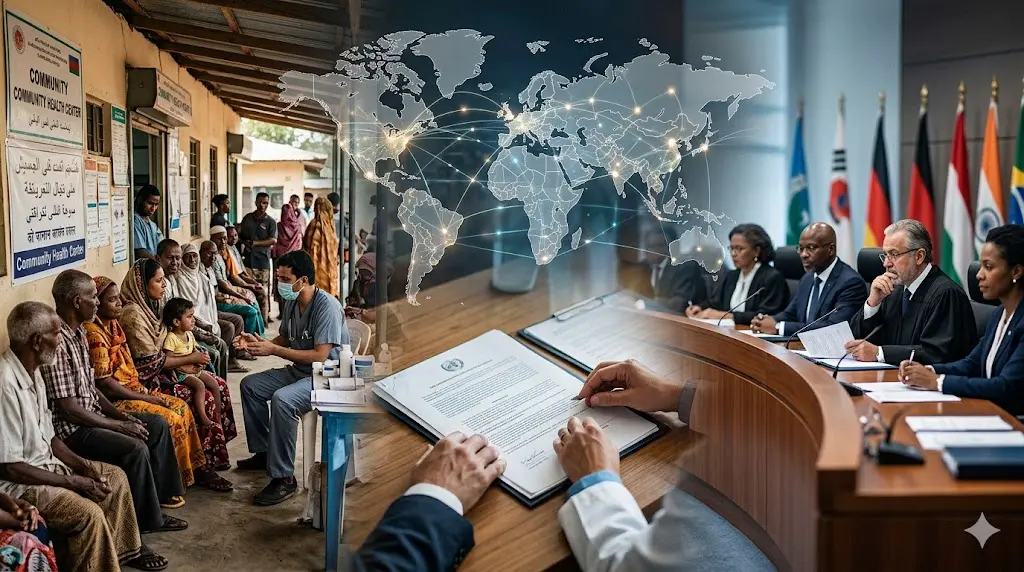
Healthcare access is no longer just a medical or policy issue. It’s actively reshaping how international legal systems interpret rights, fairness, and responsibility between countries. When you look closely, healthcare access disputes are increasingly becoming legal disputes that cross borders, and that shift is forcing courts and regulators to rethink old assumptions.
Here’s the thing: once healthcare becomes a matter of international accountability, law stops being just about rules and starts becoming about survival-level access. And that changes everything.
Healthcare access is changing international legal systems by turning medical availability and equity into legal rights disputes. This shift is influencing human rights law, cross-border regulation, and international arbitration as governments and institutions struggle to define fair access standards.
Healthcare Access in Legal Systems: The legal interpretation of a person’s or population’s right to obtain medical care and how governments are held accountable for providing it.
What Is Healthcare Access in International Legal Systems?
When you hear “healthcare access,” you probably think about hospitals, doctors, or insurance coverage. But in legal terms, it goes much deeper than that.
It becomes a question of whether governments are fulfilling obligations to provide fair and timely medical care, especially when resources are limited or unevenly distributed across borders.
What most people overlook is how often healthcare access now intersects with migration law, trade agreements, and even emergency response frameworks. It’s not just domestic policy anymore—it’s international accountability.
Let me be direct. In international legal discussions, healthcare access is increasingly treated as a measurable right rather than a moral aspiration. That shift alone is reshaping how disputes are argued.
Expert tip: Legal arguments involving healthcare access tend to succeed more often when they rely on demonstrable access gaps rather than general claims of inequality.
Why Healthcare Access Matters in 2026 for Legal Systems
In 2026, healthcare access is under more global pressure than ever. Population movement, climate-related displacement, and uneven resource distribution are pushing legal systems into unfamiliar territory.
Here’s the thing. When people cross borders for treatment or during emergencies, legal responsibility doesn’t stay neatly within one country. It spills over.
At least from what I’ve seen in policy debates, governments are struggling less with medical capacity and more with legal definitions of obligation. Who is responsible when a citizen cannot access care abroad? Or when emergency treatment standards differ across jurisdictions?
What makes this even more complicated is expectation. People now assume access to healthcare is a baseline right, not a privilege tied to geography or income.
And here’s a counterintuitive point. Better global connectivity hasn’t solved healthcare inequality—it has made it more visible, which actually increases legal pressure on governments.
Expert tip: Transparency in healthcare systems tends to increase legal accountability faster than it improves actual infrastructure.
How Healthcare Access Influences International Legal Systems Step by Step
Understanding how healthcare access turns into legal action helps make the system clearer.
First, a healthcare gap is identified. This could be lack of access to emergency care, delayed treatment, or unequal distribution of medical resources across populations.
Next, documentation begins. Patients, organizations, or governments collect evidence showing how access was restricted or inconsistent.
Then legal frameworks are identified. This is where international human rights law, regional treaties, or bilateral agreements come into play.
After that, claims are escalated to legal bodies or arbitration panels. These may involve cross-border institutions depending on the nature of the dispute.
Finally, rulings or recommendations are issued, which may require policy changes, compensation, or systemic reforms.
When Legal Systems Misread Healthcare Data
A common misconception is that healthcare data automatically reflects fairness. It doesn’t. It reflects availability, not lived experience.
For example, a hospital may report adequate capacity, but patients might still experience delays due to regional inequality or staffing shortages that aren’t visible in raw data.
That gap is where many legal misunderstandings begin.
Real-World Example: Cross-Border Emergency Treatment Dispute
Imagine a scenario where a patient from one country travels to another for emergency treatment during a public health crisis. The patient receives delayed care due to overcrowding, and complications follow.
Now the question becomes: which system is responsible?
The home country might argue it fulfilled its obligations by referring the patient abroad. The host country might argue it had no legal duty to prioritize foreign nationals during a crisis.
Healthcare access data becomes central here—wait times, triage decisions, resource allocation records, everything.
In one similar real-world policy discussion I followed, the dispute wasn’t about medical negligence. It was about whether “reasonable access” had been provided under international expectations.
Let me be honest. These cases rarely feel purely legal. They feel deeply human, which makes them harder to resolve cleanly.
Expert Insight: The Hidden Pressure Behind Healthcare Law
Here’s my take. The biggest shift isn’t just legal—it’s psychological.
Governments are now under constant visibility pressure. Citizens can compare healthcare access across countries in real time, which changes expectations overnight.
What most legal frameworks miss is that perception often drives disputes more than actual service levels. If people believe access is unfair, legal pressure builds regardless of technical compliance.
I’ve seen policy discussions where systems met formal standards but still faced international criticism because outcomes felt unequal.
And honestly, that gap between “compliant” and “fair” is where most modern healthcare disputes begin.
Expert tip: Legal systems that focus only on compliance metrics often underestimate how perception-based healthcare claims escalate internationally.
What Actually Works in Managing Healthcare Access Disputes
From what I’ve observed, the most effective approaches combine data transparency with flexible interpretation.
Rigid rules don’t work well in healthcare because conditions change too quickly. A system that looks sufficient on paper might fail under real-world stress.
Another thing I’ve noticed is that early dispute resolution works better than formal escalation. Once healthcare access issues reach international courts, the emotional and political stakes are already high.
Here’s something people don’t always expect. Some of the strongest legal outcomes come from collaborative data-sharing agreements between countries, not from adversarial rulings.
It sounds simple, but it’s surprisingly rare in practice.
Expert tip: Cross-border healthcare disputes resolve more smoothly when data sharing is standardized before crises occur, not during them.
How Legal Systems Are Adapting to Healthcare Access Issues
International legal systems are slowly adjusting to this new reality.
Healthcare access is increasingly being treated as part of human rights frameworks, not just policy guidelines. That means governments are being held accountable in more structured ways.
But adaptation is uneven. Some regions treat healthcare access as a core legal obligation, while others still see it as a policy goal rather than an enforceable right.
And here’s the tension. The more healthcare becomes globally standardized, the harder it becomes to account for local constraints like funding, geography, and infrastructure.
That contradiction isn’t going away anytime soon.
Personal Observation: What Changed My View on This Topic
I once came across a discussion involving two healthcare systems evaluating the same crisis response. One system believed it had performed adequately under pressure. The other criticized it as insufficient based on international expectations.
What stood out to me wasn’t the disagreement itself, but how both sides were technically correct within their own frameworks.
That moment made something clear. Healthcare access law isn’t just about facts—it’s about aligning different interpretations of fairness.
And that alignment is still far from settled.
People Most Asked About Healthcare Access and Legal Systems
Why is healthcare access becoming a legal issue internationally?
Because access is now seen as a human right, and governments are increasingly held accountable when care is delayed or unequal across borders.
How do legal systems measure healthcare access?
They often rely on data like treatment availability, response times, and infrastructure capacity, though interpretation varies widely between jurisdictions.
Can countries be legally responsible for healthcare access abroad?
In some cases, yes, especially when international agreements or emergency protocols define shared responsibility.
Does healthcare inequality affect international law?
Yes, it influences human rights cases, migration disputes, and cross-border emergency response obligations.
What is the biggest challenge in healthcare-related legal cases?
The gap between measurable data and real-world patient experience, which often leads to conflicting interpretations of fairness.
If you want stronger online authority and wider digital reach, our Network site provide related offering Guest Posting Services and Press Release News Submission, seo and local business listing in uk designed to improve organic traffic, brand visibility, and SEO ranking through high authority backlinks and instant publishing. Platforms like press release publishing and SEO services help businesses, agencies, and startups gain media coverage, build trust signals, and strengthen their online presence with performance-driven digital marketing and targeted outreach strategies.