

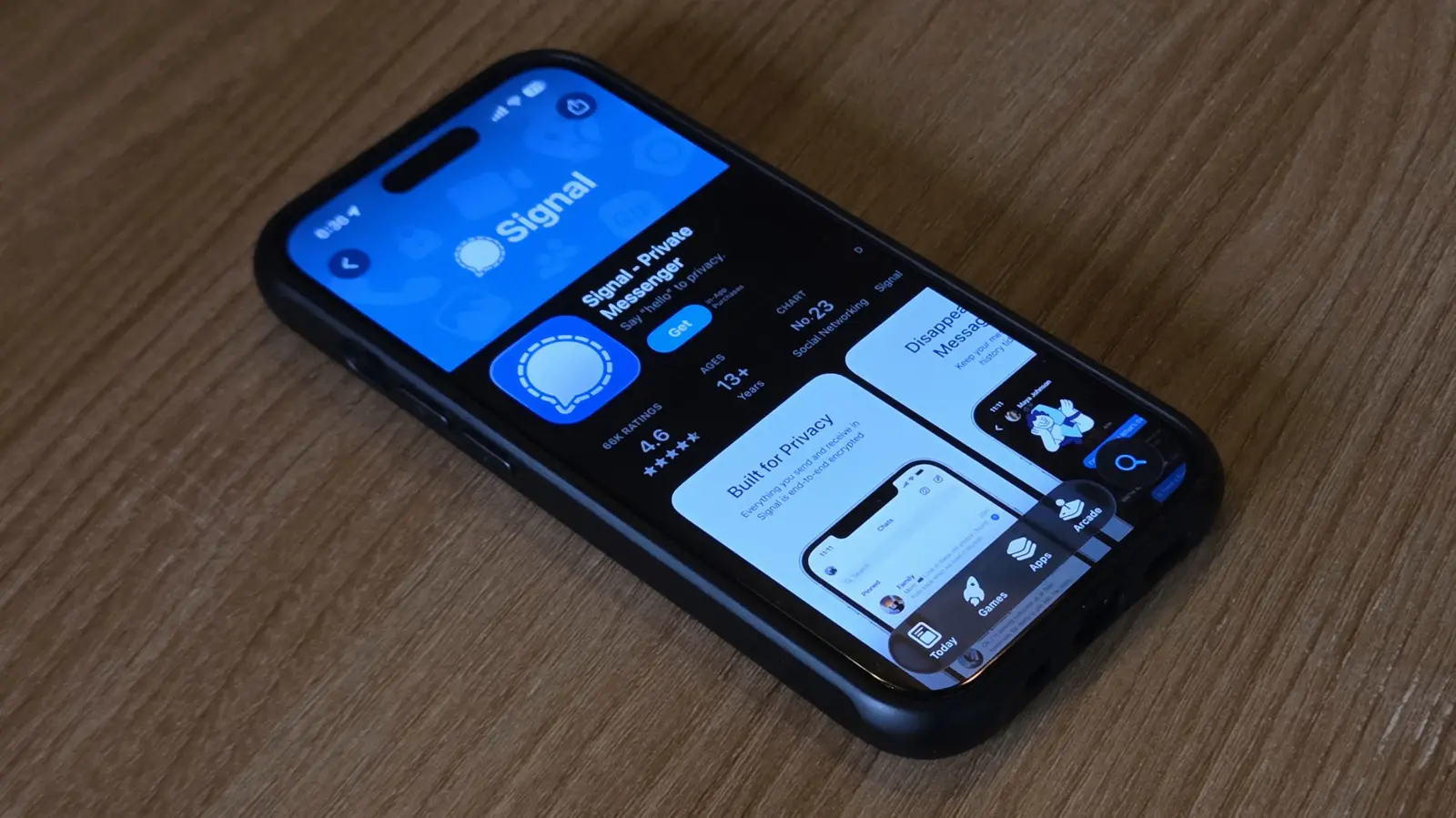
The iPhone isn't really the kind of device you'd expect to hold onto an app's data after you delete the app. But apparently it did, and not in any obvious way. In fact, earlier in April, 404 Media reported that the FBI was able to recover copies of incoming Signal messages from the iPhone's notification database — even after the app had been uninstalled. And this is Signal we're talking about, one of the more popular secure iPhone apps that let you hide messages and chat privately. The platform is widely considered more private than the likes of WhatsApp due to its robust end-to-end encryption (E2EE) and stores very little user data.
But none of this meant anything since the iPhone itself proved to be the culprit in this case. Worse, as an additional security step, those recovered messages were rigged to self-destruct after a set timer, which had run out. The arrests came out of an incident in July at the ICE Prairieland Detention Facility, a federal holding center down in Alvarado, Texas. There, a group allegedly set off fireworks, vandalized property, and one of them allegedly shot a police officer in the neck. The bigger question hanging over the whole thing, though, is how the FBI got at the Signal data in the first place.
What gave the texts away
As for how the FBI was able to pull it off, well, it's got something to do with a system-level cache built into iOS. Whenever you receive a message on Signal on the iPhone, iOS fires off a push notification. It flashes on the lock screen, and the contents actually get logged inside an internal database on the device. This applies to any app that's allowed to display notification content.
As for why this even exists, it's actually essential for several Notification Center features beyond just showing alerts — things like grouping and swipe-to-reply. The full mechanics of this database aren't really public knowledge. What we do know is that it's very unlike Android, which has a user-facing notification history feature you can scroll back through. iOS doesn't let you do that.
The trial where FBI Special Agent Clark Wiethorn testified about the extraction provides more details. Since it's only incoming messages that trigger notifications, not outgoing ones, only part of the conversation was recoverable.
This isn't the first time push notifications have proved useful in investigations. Back in June 2025, 404 Media reported that Apple had handed over data on thousands of them in response to legal demands from governments around the world. The Prairieland situation is different, though, since investigators here had physical access to the suspect's phone. This lets them run forensic tools on it directly, which is often something like the Cellebrite kit law enforcement uses to recover data from phones in custody. Ultimately, they didn't have to request anything from Apple at all.
Apple apparently patched the bug
If you're worried about the privacy implications, the good news is that Apple has now apparently plugged the issue. iOS update 26.4.2, which landed toward the end of April, contained a patch for 'notifications marked for deletion could be unexpectedly retained on the device.' The notes say that 'a logging issue was addressed with improved data redaction.' While this doesn't exactly confirm that the fix targets the flaw the FBI exploited, it certainly does seem so. iPadOS has received the same patch.
But to be on the safer side, there's an additional step you can take besides updating to the latest release. Open the Signal app, tap your profile picture in the top-left, dive into Settings, then find Notification Content. Here, pick 'No Name or Content.' This will ensure you only receive alerts that messages have arrived, with nothing else attached. You also get a 'Name Only' option that still hides notification content, but at least tells you who sent the message. Beyond this, you might want to be sure you might want to check your iPhone's lock screen notifications setting to ensure people can't see information you want to keep private.
Expanding on the technical background: The notification database in iOS is part of the system's push notification infrastructure. When a push notification arrives from a service like Signal, iOS processes it and stores relevant metadata in a SQLite database typically located at /var/mobile/Library/SpringBoard/ApplicationState/ or similar paths. This database contains not only the notification payload but also timestamps, app bundle identifiers, and, crucially, the alert body text if the notification preview setting is enabled. Forensic tools such as Cellebrite or GrayKey can extract this database even after the user has deleted the app because the database is maintained by iOS itself, independent of individual applications. The forensic examiner can then parse the database to retrieve message contents.
In the Prairieland case, the FBI seized the suspect's iPhone and used forensic software to image the device. The notification database was recovered, and from it they extracted hundreds of Signal messages that the user believed had been deleted. The messages had been set to disappear after a certain period, but because iOS cached them in the notification system before Signal's self-destruct mechanism could act, the content remained accessible. This highlights a fundamental tension between app-level security and OS-level logging.
Signal itself responded to the incident by reminding users that notification content can be a privacy risk. The company has long recommended disabling message previews in notifications for maximum security. However, many users are unaware that simply deleting an app does not remove all traces of its data from the device. iOS stores notification history in a way that is not easily accessible to the user, but is accessible to forensic tools. This is a design trade-off: the convenience of notification grouping and interactive replies requires iOS to retain notification data for a period.
Apple's decision to patch this issue in iOS 26.4.2 suggests that the company is aware of the privacy implications. The patch likely involves either clearing the notification database when an app is deleted, or encrypting the database more thoroughly so that forensic tools cannot easily read it. However, the exact nature of the fix is not public. Security researchers have noted that truly securing against this kind of recovery would require changes to how iOS manages notification data, possibly including deleting notification records when the originating app is removed. But that could break features users rely on, such as syncing notification state across devices.
For users concerned about privacy, the best defense is a combination of measures: update to the latest iOS version, disable notification previews in Signal (and other messaging apps), and use the 'No Name or Content' setting. Additionally, users can consider using the 'Lock Screen' notification settings to hide previews when the phone is locked. Another technical workaround is to use a third-party keyboard or automation that clears notification logs regularly, but this is not straightforward on iOS due to sandbox restrictions.
The incident has broader implications for digital privacy and law enforcement. While the FBI obtained the phone legally, the case raises questions about whether users have a reasonable expectation that deleted data is truly irretrievable. The answer, as this case shows, is no—at least not when the operating system retains cached copies. This is reminiscent of earlier controversies involving iOS backups that contained deleted messages, or the extraction of data from locked iPhones using tools like Cellebrite. As secure messaging apps become more popular, the weak link is increasingly the operating system's notification system.
In summary, the FBI's ability to recover deleted Signal messages from an iPhone is not a flaw in Signal's encryption, but rather an exposure in iOS's notification infrastructure. Apple has addressed the specific issue with a patch, but users should remain vigilant about notification settings. The case also serves as a reminder that digital forensics can often uncover data that users assume is gone forever.
Source: SlashGear News