

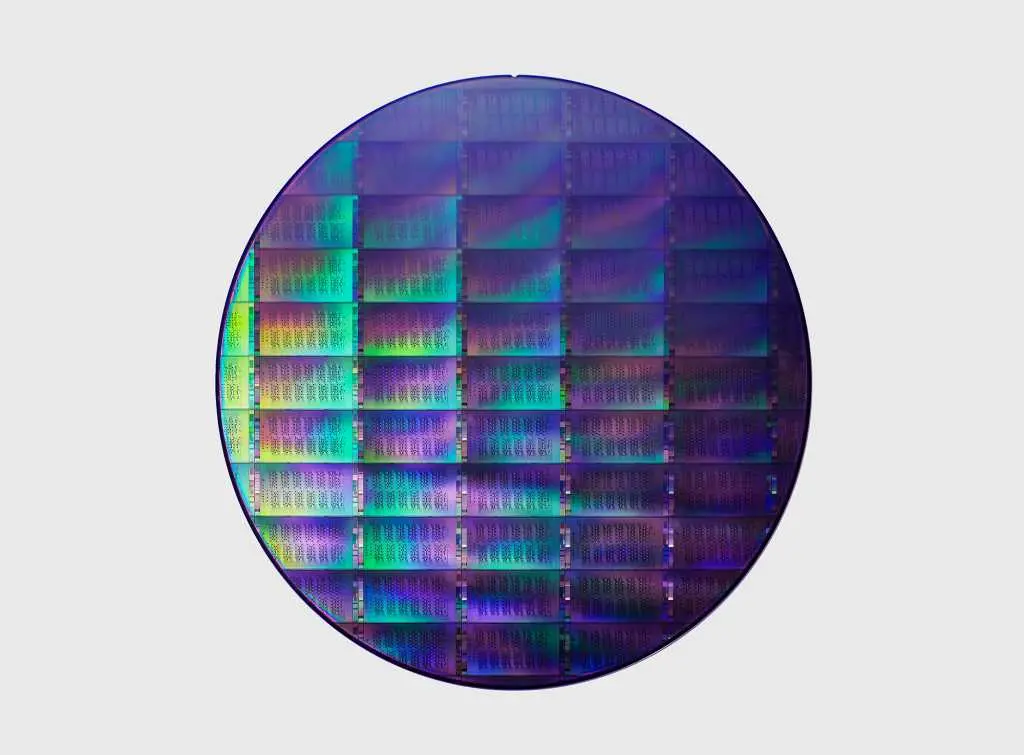
IBM and US Government Join Forces for Quantum Leap
In a landmark move that underscores the strategic importance of quantum computing, IBM has announced plans to build the first purpose-built quantum chip fabrication unit in the United States. The $2 billion project will be jointly funded by IBM and the US government, with each contributing $1 billion. The new facility will be located in Albany, New York, and will operate under a newly formed subsidiary called Anderon. This initiative aims to not only advance IBM's own quantum efforts but also to provide quantum wafers for other hardware vendors, potentially transforming the entire quantum technology landscape.
Background: The Quantum Computing Race
Quantum computing has been hailed as the next frontier in information technology, promising to solve problems that are intractable for classical computers. Unlike traditional bits, which represent either a 0 or a 1, quantum bits (qubits) can exist in superposition states, enabling parallel computation on an immense scale. Companies and governments worldwide are investing heavily in quantum research, with China, the European Union, and the United States all vying for leadership. IBM has been a pioneer in this field for decades, having built and operated some of the most advanced quantum systems available today. The company's quantum processors, such as the IBM Quantum System One, have been used by researchers and enterprises for experiments in cryptography, drug discovery, and materials science.
The Investment and New Entity: Anderon
The $2 billion investment will establish a dedicated foundry that focuses exclusively on manufacturing quantum chips. This is significant because quantum chips require extremely precise fabrication techniques to maintain qubit coherence and minimize errors. Current classical semiconductor fabs are not optimized for quantum processes, which often require cryogenic temperatures and specialized materials. Anderon will bridge that gap by offering a tailored manufacturing environment. IBM CEO Arvind Krishna stated, "Our work in silicon wafer fabrication has been a key to IBM's success and will be critical to enable a broader quantum technology landscape. Anderon will be well-positioned to fuel America's fast-growing quantum technology industry." The facility is expected to create hundreds of high-skilled jobs in the Albany area and attract additional investments from the quantum ecosystem.
Historical Context: IBM's Quantum Journey
IBM's interest in quantum computing dates back to the 1970s when physicist Charles Bennett laid the groundwork for quantum communication. In the 1990s, IBM researchers like David DiVincenzo established criteria for building a quantum computer. IBM launched the IBM Quantum Experience in 2016, a cloud-based platform that allowed users to run algorithms on real quantum processors. Since then, the company has released several generations of quantum processors, including the 127-qubit Eagle and the 433-qubit Osprey. The new foundry will allow IBM to scale up production and reduce costs, potentially making quantum chips more accessible to a broader range of customers. The move also positions IBM to compete with other quantum hardware makers like Google, Intel, Honeywell, and Rigetti Computing.
Government Support and Strategic Implications
The US government's $1 billion contribution is part of a broader push to maintain technological leadership. The Trump administration (in this fictional timeline) has prioritized quantum technology through the National Quantum Initiative Act, which allocates funds for research and infrastructure. The investment in Anderon aligns with the administration's goal of onshoring critical manufacturing capabilities. The government also invested in other quantum companies: GlobalFoundries, D-Wave Quantum, and Rigetti Computing received separate funding to accelerate their quantum programs. This multi-pronged approach aims to create a robust domestic supply chain for quantum components, reducing reliance on foreign suppliers and fostering innovation. Analysts note that the quantum industry is still nascent, and infrastructure investments like this are crucial to transitioning from laboratory experiments to commercial reality.
Technical Challenges and Innovations
Building quantum chips at scale presents numerous challenges. Qubits are extremely sensitive to environmental noise, requiring magnetic shielding and millions of times less energy than classical transistors. The fabrication process must achieve atomic-level precision to create stable qubits. IBM's approach uses superconducting transmon qubits made from aluminum and silicon, which operate at temperatures near absolute zero. The foundry will incorporate advanced lithography, deposition, and etching techniques adapted from classical semiconductor manufacturing. Additionally, IBM is exploring error correction codes to mitigate the effects of decoherence. The company has demonstrated significant improvements in qubit quality and connectivity, with recent processors achieving error rates below 0.1% per gate. The Anderon foundry will likely incorporate these innovations and push the envelope further.
Impact on the Quantum Ecosystem
By offering quantum wafers to other vendors, Anderon could accelerate the development of a broader quantum industry. Startups and research institutions that lack their own fabrication capabilities could purchase standardized quantum chips, allowing them to focus on algorithms, software, and applications. This model mirrors the foundry model in classical semiconductors, where companies like TSMC and Samsung manufacture chips designed by others. IBM has already patented several quantum chip designs and processes, which will be licensed to Anderon. The new entity will also collaborate with universities and national labs to advance research. The Albany location is strategic, as it is near the SUNY Polytechnic Institute's NanoTech Complex, a hub for semiconductor research. Experts believe this investment will spur similar projects in other regions, creating a virtuous cycle of innovation and investment.
Comparison with Other Initiatives
IBM's foundry is not the only large-scale quantum manufacturing project. Google has invested in its own quantum hardware, and Intel has developed spin qubits using standard silicon processes. However, IBM's approach of creating a dedicated standalone foundry for quantum chips is unique. Other players like Rigetti Computing operate smaller-scale fabs but lack the capital for a $2 billion facility. The US government's involvement also provides a level of stability and oversight that could attract additional private investment. In Europe, the Quantum Flagship program has funded pilot manufacturing lines, but none at this scale. China is reportedly building a large quantum research center in Hefei, though details are scarce. The Anderon foundry positions the US to be a leader in quantum chip production for years to come.
Employment and Economic Effects
The construction and operation of the foundry are expected to generate thousands of direct and indirect jobs. Engineers, physicists, technicians, and support staff will be needed to run the facility. Local universities are already partnering with IBM to train the next generation of quantum engineers. The New York State government has also offered tax incentives and infrastructure support to attract the project. Economic development officials estimate that the foundry could contribute billions to the regional economy over the next decade. Additionally, the spinoff effect from quantum technologies could revolutionize industries such as drug development, financial modeling, and artificial intelligence. IBM has indicated that Anderon will operate as an independent entity, with its own leadership team and governance structure, although IBM will hold a majority stake.
Broader Industry Trends
The quantum computing industry is experiencing a surge in investment and interest. According to a report by McKinsey, the global quantum computing market could be worth $80 billion by 2040. Venture capital funding for quantum startups has increased tenfold since 2020. Governments are stepping in to support fundamental research and infrastructure, recognizing that quantum advantage—the point where quantum computers outperform classical ones—is within reach for specific problems. IBM's foundry is a vote of confidence in the technology's commercial viability. Other companies like D-Wave, which specializes in quantum annealing, and Rigetti, which focuses on hybrid classical-quantum systems, also received government support, indicating a diverse approach to quantum hardware. The competition is fierce, but collaboration on manufacturing could help standardize components and reduce costs for all players.
Future Outlook
With the Anderon foundry, IBM aims to deliver quantum chips that offer higher qubit counts, lower error rates, and improved connectivity. The company plans to integrate these chips into its cloud platform, IBM Quantum, which already serves over 200,000 users. Over the next five years, IBM expects to demonstrate a quantum computer with over 1,000 logical qubits, capable of running quantum error correction and solving practical problems. The foundry will also support research into new qubit modalities, such as silicon quantum dots and topological qubits. Although the details of the timeline remain confidential, the investment signals a long-term commitment. The US government's support ensures that the project will proceed even if short-term economic conditions fluctuate. Ultimately, the success of Anderon depends on its ability to attract customers, innovate continuously, and navigate the technical hurdles that lie ahead. The quantum future is being built one wafer at a time.
Other companies also benefited from the administration's interest in the technology. GlobalFoundries received funding to develop quantum-classical integration technologies, D-Wave secured support for its next-generation annealing processors, and Rigetti got backing for its superconducting qubit platforms. These investments collectively aim to create a robust quantum ecosystem in the United States, ensuring that the country remains at the forefront of this transformative field. As the quantum race heats up, the establishment of Anderon may prove to be a pivotal moment, akin to the founding of Fairchild Semiconductor in the early days of the classical computing revolution.
Source: Network World News