

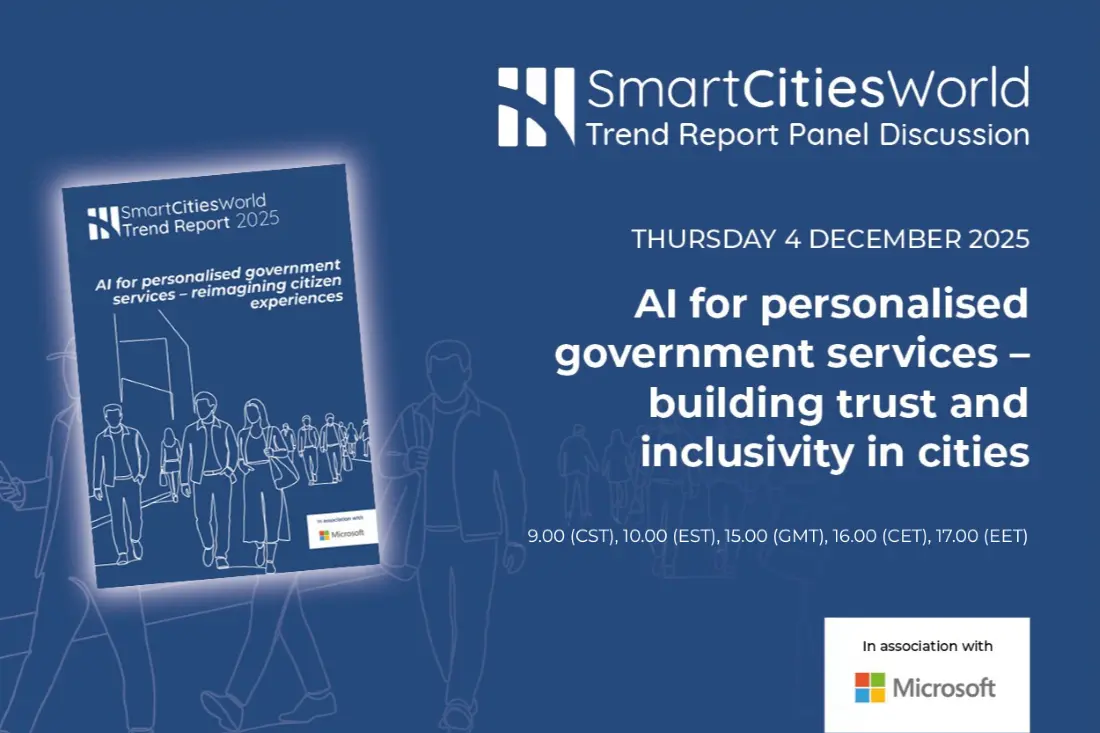
AI for Personalised Government Services – A New Era of Urban Trust
Governments worldwide are racing to harness artificial intelligence to deliver more responsive, inclusive, and trustworthy public services. At the heart of this transformation is the challenge of bridging fragmented systems, securing citizen data, and ensuring that AI serves all communities equitably. These themes took centre stage in a recent OnDemand trend report panel discussion, where thought leaders dissected the role of AI in personalised government services, particularly in cities striving for smarter, more connected infrastructure.
Digital Twins: The Intelligent Operating Layer for Urban Infrastructure
AI-powered digital twins are emerging as a critical tool for urban planning and management. By creating real-time virtual replicas of physical assets—from transportation networks to energy grids—cities can simulate scenarios, predict maintenance needs, and optimise resource allocation. The panel highlighted how these intelligent operating layers enable municipalities to improve efficiency, resilience, and sustainability. For instance, digital twins allow traffic engineers to model congestion patterns and test interventions before implementing them on the ground, reducing disruptions and enhancing commuter experiences.
In the context of personalised government services, digital twins can also support citizen-centric decision-making. By integrating demographic data, service usage patterns, and feedback loops, city officials can tailor public offerings—such as waste collection schedules, park maintenance, or emergency response routes—to the specific needs of neighbourhoods. This hyper-local approach builds trust by demonstrating that governments understand and act on the unique challenges faced by different communities.
Data and AI in Urban Transport Networks
Transport is one of the most visible areas where AI is improving outcomes for both planners and passengers. The panel discussed how cities are using data from sensors, GPS, and mobile apps to optimise routes, reduce emissions, and enhance safety. Machine learning algorithms analyse historical and real-time data to predict demand, adjust schedules, and even anticipate accidents before they happen. For passengers, this means shorter wait times, less congestion, and more reliable services—especially in underserved areas where traditional public transit may be scarce.
Personalisation in transport also extends to accessibility. AI-driven apps can now provide tailored route recommendations for individuals with disabilities, elderly residents, or those with specific mobility needs. By integrating such features into government-run transport platforms, cities ensure that inclusivity is not an afterthought but a foundational design principle.
Connecting Data, Tightening Security, and Harnessing AI
A recurring theme of the discussion was the urgency for cities to connect siloed data sources while fortifying cybersecurity. Many urban governments still operate with fragmented systems across departments—health, transport, utilities, public safety—that hinder the delivery of seamless services. The panel noted that breaking down these barriers requires not just technical integration but also organisational change and a clear data governance framework.
AI can play a dual role: it can analyse cross-departmental data to surface insights that no single agency could see, but it also introduces new risks around privacy, bias, and security. The experts stressed that without robust encryption, access controls, and transparency measures, AI-driven services could erode public trust. Cities must adopt a 'security-first' mindset, embedding protections into every layer of their digital infrastructure.
ITU’s Cristina Bueti, a key participant, argued that urban leaders must prioritise interoperability, inclusivity, and human oversight now—or risk being locked into proprietary systems that limit future flexibility. "The decisions we make today will define the next decade of urban AI," she said. "We cannot afford to build walls around our data or our citizens’ trust."
City Profiles: Sunderland and Dublin Lead the Way
Two city profiles discussed in the panel illustrate the practical application of these principles. Sunderland, UK, is repositioning itself as a leading smart city by investing in digital infrastructure and low-carbon innovation. The city has deployed IoT sensors across streetlights, waste bins, and parking spaces to gather real-time data, which is then fed into an AI platform that optimises maintenance and energy use. Sunderland’s approach prioritises community engagement, ensuring that residents have a voice in how technology shapes their environment.
Dublin, Ireland, is pursuing similar innovations with a focus on improving citizen experiences. The city has launched digital twin projects to model traffic, pedestrian flow, and economic activity, enabling more informed urban planning. Dublin also uses AI to reduce traffic congestion through adaptive signal controls and to support economic growth by identifying potential business districts. The panel highlighted that both cities are investing in training and capacity building so that government staff can confidently work with AI tools—a crucial step for long-term success.
Smart Lighting: The Foundation for Future-Proof Infrastructure
The panel also touched on smart lighting as a gateway to broader smart city capabilities. Smart streetlights equipped with sensors and connectivity can serve as nodes for environmental monitoring, public Wi-Fi, and even electric vehicle charging. The first step, however, is ensuring that these lighting networks are secure and interoperable. The Cities Thriving on Lighting series—referenced in the panel’s materials—explored how global cities are tackling cybersecurity risks associated with smart lighting, from firmware updates to data encryption. A well-designed smart lighting system can become the backbone of a city’s digital ecosystem, supporting everything from traffic management to emergency alerts.
UN Virtual Worlds Day: Towards Trusted Citiverse Outcomes
The United Nations Virtual Worlds Day event was highlighted as a platform for turning AI, spatial intelligence, and the emerging 'Citiverse' into people-centred outcomes. Paul Wilson, a contributor to the discussion, explained that such gatherings are essential for aligning international standards with local needs. The Citiverse—a network of interconnected digital twins of cities—promises to allow urban planners to collaborate across borders, sharing best practices and data models. However, the panel warned that these virtual worlds must be built on trust, transparency, and inclusive governance, or risk amplifying existing inequalities.
Smart Sensor Networks for Indoor Safety
The conversation extended beyond outdoor infrastructure to indoor safety. Smart sensor networks, integrated with AI, can detect risks such as gas leaks, fires, or structural weaknesses in buildings early, improving situational awareness for building managers and emergency responders. These systems also support healthier indoor environments by monitoring air quality, humidity, and occupancy patterns. For governments responsible for public buildings like schools, hospitals, and libraries, deploying such sensors is a logical step in protecting citizens and assets.
The panel emphasised that sensor data must be anonymised and handled with care to avoid surveillance overreach. Clear policies about data retention, access, and public notification are necessary to maintain trust.
Data Strategy for Smarter Operations
A dedicated OnDemand webinar on data strategy reinforced the message that technology alone is insufficient. Cities need a comprehensive approach that includes data governance standards, interoperability protocols, and workforce training. Legacy systems, data silos, and lack of skilled personnel remain significant barriers. The webinar suggested that cities start small with pilot projects that deliver quick wins, then scale up using lessons learned. This iterative approach reduces risk and builds internal confidence.
The Essential Role of News and Information Sharing
The SmartCitiesWorld newsletters, both daily and weekly, were mentioned as a resource for staying current with the latest developments. These updates combine news reports, city interviews, special reports, and guest opinions, providing a steady stream of insights for urban professionals. The panel encouraged attendees to subscribe and share their own experiences to foster a global community of practice.
Key Takeaways for Urban Leaders
Throughout the panel, several actionable strategies emerged:
- Prioritise interoperability: Avoid vendor lock-in by adopting open standards and modular architectures that allow for future integration.
- Embed inclusivity from the start: Engage diverse communities in co-designing services to ensure that AI benefits everyone, not just tech-savvy residents.
- Establish human oversight: Keep humans in the loop for critical decisions, particularly those involving welfare, safety, or resource allocation.
- Invest in data literacy across government departments so that staff can interpret AI outputs and challenge biased or inaccurate results.
- Build for security and privacy: Deploy encryption, access controls, and transparent data use policies as foundational elements, not afterthoughts.
As the panel concluded, the conversation turned to the future. The hyper-personalisation of government services, powered by AI, holds immense promise—but only if cities earn and maintain the trust of their citizens. This trust depends on demonstrable value, ethical design, and a commitment to leaving no one behind. The panelists agreed that the journey is just beginning, but the cities that act now, with foresight and collaboration, will set the standard for decades to come. The dialogue continues in upcoming webinars and city profiles, always with the goal of turning data into dignity and algorithms into equity.
Source: Smart Cities World News