

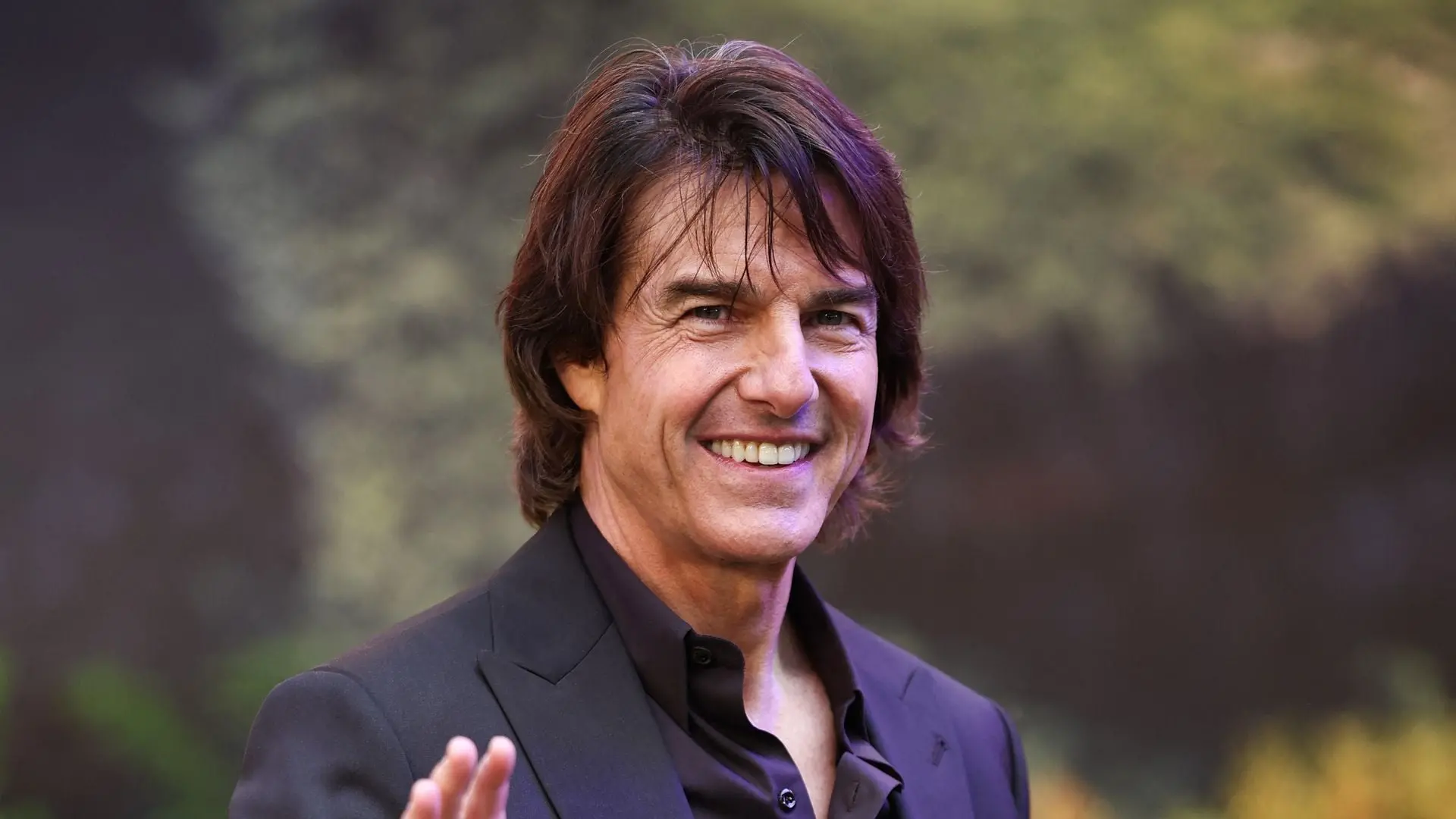
It is hard to imagine anyone other than Tim Robbins walking the halls of Shawshank State Penitentiary, clutching a rock hammer and dreaming of Zihuatanejo. Yet, for a brief moment in the early 1990s, Hollywood's biggest star, Tom Cruise, was in serious contention to play Andy Dufresne in what would become one of the most beloved films of all time: The Shawshank Redemption (known in German as Die Verurteilten). The story of how Cruise nearly landed the role—and why he ultimately walked away—is a fascinating what-if that reveals much about the delicate chemistry of casting and the unpredictable nature of film history.
In the years following his breakout success in Top Gun (1986) and Rain Man (1988), Tom Cruise was at the peak of his powers. He had shown dramatic range in Born on the Fourth of July (1989) and was coming off the courtroom drama A Few Good Men (1992), directed by Rob Reiner. That collaboration was a success, and Reiner initially planned to adapt Stephen King's novella Rita Hayworth and Shawshank Redemption for the screen. Reiner had even begun developing the project, and Cruise was reportedly eager to reunite with him. The prospect of playing Andy Dufresne, a banker wrongly convicted of murder who maintains hope over two decades of imprisonment, was tantalizing. Cruise even participated in a table read of the script, a step that usually signals serious interest.
However, the project took an unexpected turn when screenwriter Frank Darabont, who had written the adaptation, insisted on directing the film himself. At the time, Darabont was a relatively unknown writer with only one short film and a handful of credits—including an uncredited polish on The Fly II—to his name. He had never directed a feature-length film before. This made both Cruise and Reiner uneasy. Reiner, a seasoned director with hits like Stand by Me and When Harry Met Sally..., stepped aside, but Cruise was not willing to take a risk on an untested novice. According to interviews Darabont gave years later, Cruise was "a little nervous about working with a first-time director" and felt he might be "too big for the film." The actor's decision to abandon the project was a major setback for Darabont, but it opened the door for others.
Interestingly, Cruise was not the only major star to pass on the role. Kevin Costner, who had just won an Oscar for Dances with Wolves and starred in The Bodyguard, was also considered but turned it down to focus on his own pet project, Waterworld—a decision that would later prove financially disastrous. Tom Hanks, already a beloved star after Philadelphia and Forrest Gump, was offered the part but declined because he was committed to Forrest Gump and found the script too dark at the time. (Hanks would later say he regrets the decision, though he has since worked with Darabont on The Green Mile.) Finally, the role fell to Tim Robbins, a talented actor known for his work in Bull Durham and The Player. Robbins delivered an iconic performance, bringing a quiet dignity and unshakeable hope to Andy Dufresne that perfectly balanced Morgan Freeman's wise narration as Red.
The casting of the supporting characters also involved close calls. Brad Pitt, then rising to fame after Thelma & Louise (1991), was offered the role of Tommy Williams, a young inmate whose testimony could prove Andy's innocence. But Pitt chose instead to star in Interview with the Vampire (1994), where he would eventually work alongside Tom Cruise—though in a very different genre. Tommy Williams ended up being played by Gil Bellows in a poignant performance that leaves audiences yearning for justice. Pitt's decision, like Cruise's, altered the fabric of the film, but in a way that ultimately worked.
Why did these stars say no? In many cases, it was a matter of timing and perception. The 1990s were a time when prestige dramas were often seen as safer bets than prison films, which were associated with bleakness and limited box office potential. Indeed, The Shawshank Redemption was not an immediate commercial success. Upon its release in September 1994, it grossed only $16 million during its initial theatrical run, barely covering its budget. But through word-of-mouth, critical acclaim, and multiple Oscar nominations (including Best Picture), it found a second life on home video and cable television. Today, it consistently ranks as one of the greatest films of all time on IMDb and other polls, and its reputation only continues to grow.
The film's enduring appeal lies in its themes of hope, friendship, and redemption—universal emotions that transcend time. Every frame reflects Darabont's meticulous direction and the deep care he poured into the source material. Had Cruise taken the role, the film might have been very different. Cruise's charisma is undeniable, but he tends to project a certain clean-cut intensity that might have clashed with Andy's vulnerability. Robbins, with his lanky frame and soulful eyes, better captured the character's exhaustion and resilience. Similarly, the film's deliberate pacing, its quiet moments (like listening to Mozart's Le Nozze di Figaro over the prison loudspeaker), and its focus on atmosphere rather than action would have required a different kind of performance from Cruise, who was used to more kinetic films.
In hindsight, the casting of The Shawshank Redemption is a master class in how the right actors can elevate a story. Morgan Freeman, then in his early 60s, brought a gravitas and warmth that made Red the heart of the film. Bob Gunton as the villainous Warden Norton, Clancy Brown as Captain Hadley, and William Sadler as Heywood all contributed to a seamless ensemble. The film's score by Thomas Newman, its cinematography by Roger Deakins, and its screenplay by Darabont (based on King's story) all came together to create a perfect storm of artistry. It is a rare example of a movie that is both beloved by critics and adored by audiences, winning the hearts of millions over the decades.
Tom Cruise went on to have a spectacular career with Mission: Impossible, Jerry Maguire, and Magnolia. He has no shortage of iconic roles. But the missed opportunity to play Andy Dufresne remains a fascinating footnote in Hollywood lore. It speaks to the unpredictability of the industry, where a single decision can change the course of a film—and a career. And it reminds us that The Shawshank Redemption, despite nearly being cast very differently, found its perfect players. The film stands as a testament to the power of patience, faith, and the right people in the right place at the right time.
Beyond casting curiosities, the story of The Shawshank Redemption is also a lesson in persistence. Frank Darabont spent years trying to bring King's novella to the screen, holding the rights for almost a decade before finally getting the chance. He wrote the script on spec, refused to compromise on his vision, and ultimately delivered a masterpiece. His decision to insist on directing, though it cost him Cruise, proved justified. The film earned seven Academy Award nominations and continues to be studied in film schools for its narrative structure and emotional depth. It also launched a fruitful collaboration between Darabont and King, leading to The Green Mile (1999) and The Mist (2007).
As for the actors who said no, none have expressed deep regret because the film succeeded so brilliantly with its eventual cast. Cruise, in particular, has rarely spoken about the decision publicly, but insiders note that he has always been selective about roles that require a vulnerable, passive protagonist—and Andy Dufresne, while heroic, endures a great deal of suffering before his triumph. Cruise's strengths lie in active, driven characters, which may explain his hesitation. In a parallel universe, he might have been a very different Andy, but the multiverse of cinema gave us the version we treasure.
Thus, the legend of Tom Cruise almost starring in The Shawshank Redemption stands as a compelling 'what if' that ultimately proves that sometimes, the best decisions are the ones not taken. The film became a cultural touchstone, a beacon of hope for anyone who has ever felt trapped or beaten down. And it remains a shining example of how the right alchemy of cast, crew, and creative vision can produce something timeless.
Source: Promiflash.de News