

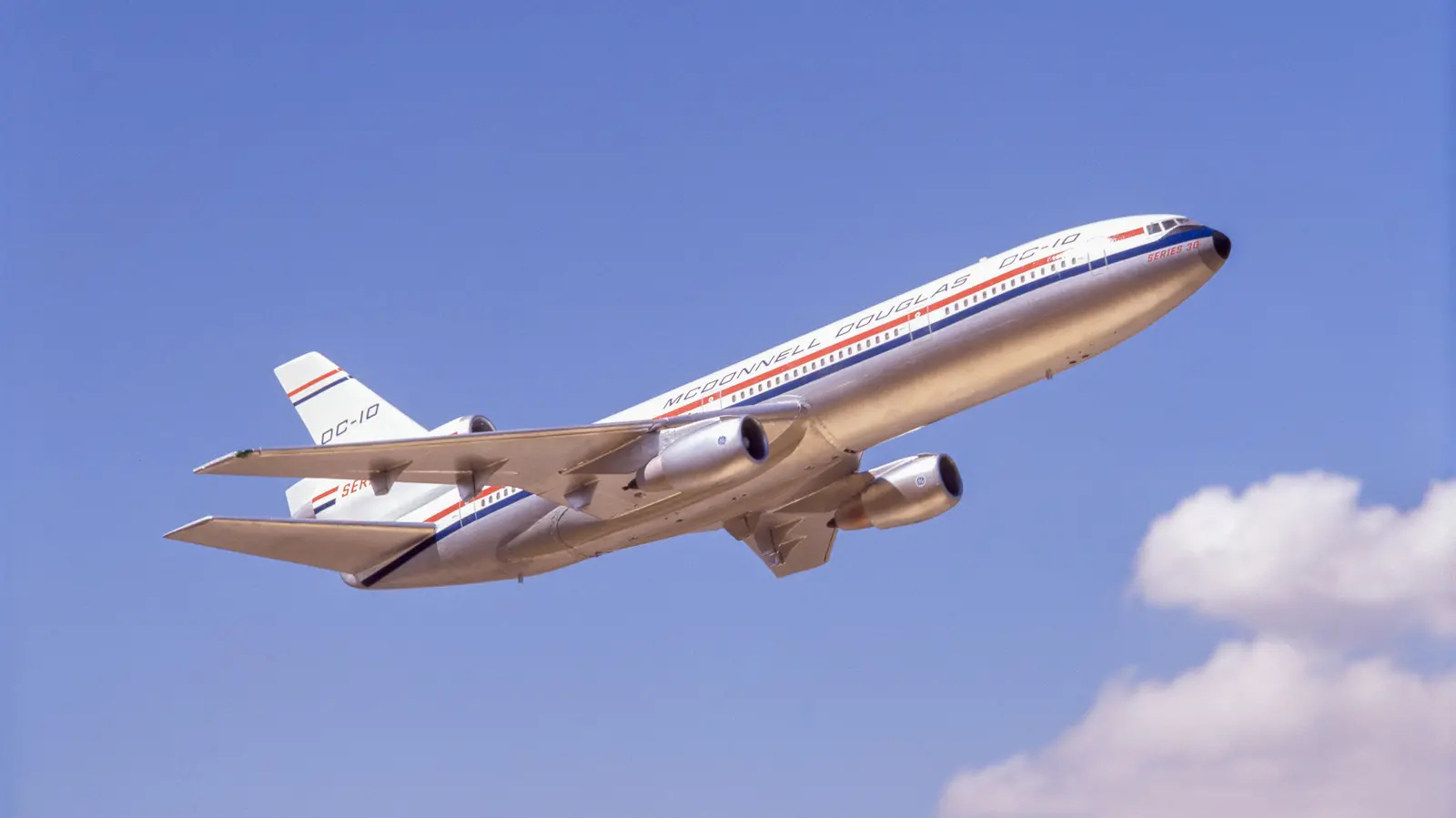
Imagine cruising at 30,000 feet, stretched out in a comfortable seat with plenty of legroom while a flight attendant in an eye-catching uniform serves you a glass of wine or a gourmet meal. This wasn't just first class—this was the Golden Age of travel, spanning the 1950s through the 1970s. Air travel was once an exclusive, glamorous experience reserved for the wealthy or those on business. Today, however, flying has become a mass-market commodity, characterized by budget fares, tight seats, and strict security. The changes over the last 50 years have been profound, touching nearly every aspect of the passenger experience. From the air we breathed onboard to the price we pay for tickets, here are five of the biggest ways flying has changed since the 1970s.
Smoking
Today, it's hard to imagine stepping onto an airplane and navigating through a haze of cigarette smoke—it would likely cause panic. But in the 1970s, smoking was not only allowed, it was expected. Passengers lit up in restaurants, hospitals, public transit, and yes, on planes. The first significant regulation came in 1973 when the Civil Aeronautics Board mandated that all domestic flights offer both smoking and non-smoking sections. For decades, the familiar question "Smoking or non-smoking?" greeted travelers boarding a flight. However, the rules were amended several times: by the 1980s, smoking was banned on short flights, and in 1990 President George H.W. Bush signed a law prohibiting smoking on flights of six hours or less. It wasn't until 2000 that smoking was completely banned on all flights, including international ones. The ban wasn't just about comfort—it saved lives. In 1973, a passenger aboard a Varig flight from São Paulo to Rio de Janeiro discarded a cigarette in a lavatory bin instead of an ashtray, igniting a fire that caused an emergency landing and killed 123 people. Today, even though smoking is banned, federal regulations still require ashtrays in lavatories to ensure any illicit cigarette has a safe place to be extinguished.
Security
Even first-time flyers today know to expect strict security: metal detectors, advanced imaging machines, pat-downs, and carefully screened carry-on luggage. Identification requirements are stringent, with REAL ID or a passport now mandatory for domestic flights. This wasn't always the case. In the 1960s, a wave of hijackings prompted airlines to lock cockpit doors and deploy Sky Marshals, but passengers did not have to pass through metal detectors until 1973. Even then, each airline screened its own passengers, and security was inconsistent. Perhaps the most shocking difference: until September 11, 2001, anyone could walk up to an airport gate without a ticket. The 9/11 attacks transformed airport security overnight, leading to the creation of the Transportation Security Administration (TSA) just months later. Today, the TSA screens over 2 million passengers daily, using advanced technology and behavioral detection techniques. While the long lines and pat-downs can be frustrating, there is no doubt that air travel is far more secure than it was 50 years ago. The risk of hijacking or terrorism has been drastically reduced, though security measures continue to evolve in response to new threats.
Pricing
Perhaps the most dramatic change in air travel is the cost. Before deregulation in 1978, the federal government set prices for all carriers. Airlines competed not on price but on service: gourmet meals, complimentary alcohol, even cigarettes and lounges were standard. This bundled pricing meant a ticket covered everything—no bag fees, no charges for snacks. Deregulation was intended to lower fares and increase competition, and it succeeded beyond expectations. Adjusted for inflation, airfares today are roughly half what they were in 1978. The number of flights and destinations exploded, and budget airlines like Southwest and Ryanair emerged, making air travel accessible to the masses. However, the trade-off has been a steady erosion of amenities. Today's passengers in economy class often receive the bare minimum: a small bag of pretzels and a beverage. Airlines now unbundle services, charging extra for checked bags, seat selection, meals, and Wi-Fi. Some carriers even charge for carry-on bags. This a la carte pricing model can be frustrating, particularly for families who want to sit together without paying extra. While few passengers would willingly return to the high fares of the 1970s, many miss the perks that once came standard.
Smaller Seats
If you've been flying for decades and feel increasingly cramped, you're not imagining it. Airlines have steadily reduced seat dimensions to pack more passengers on each plane. In the 1970s, economy seats were typically 18 inches wide with a seat pitch (the distance between rows) of 34 inches. Today, standard economy seats are about 17 inches wide, and seat pitch has shrunk to an average of 31 inches—a loss of three inches of legroom. Some ultra-low-cost carriers squeeze even more, with seat pitch as low as 28 inches. This downsizing is driven by economics: more seats means more revenue per flight. To offset passenger discomfort, airlines have introduced thinner seats with less padding and redesigned them to create an illusion of space. But the reality is that passengers, especially taller ones, often find it difficult to sit comfortably for long flights. The shrinking of seats has also raised safety concerns: the Federal Aviation Administration has been petitioned to set minimum seat dimensions to ensure safe evacuation in an emergency. As of now, no such rule exists, and seats continue to shrink. The trade-off between affordability and comfort remains one of the most contentious issues in modern air travel.
Safety
Despite the many changes that have made flying less comfortable, one area has improved dramatically: safety. Aircraft technology, air traffic control, and regulatory oversight have all advanced significantly. In the 1970s, there was about one fatal accident for every 165,000 flights. For passengers, that meant roughly one death per 350,000 travelers. Today, the rate is about one fatality per 13.7 million passengers—a staggering improvement. This progress is the result of decades of rigorous investigation by the National Transportation Safety Board (NTSB), which studies every accident to prevent future ones. Modern aircraft are equipped with advanced avionics, collision avoidance systems, and enhanced weather radar. Maintenance standards are stricter, and pilots undergo continuous simulation training. Additionally, the ban on smoking reduced fire risks, and improved security measures have thwarted potential attacks. Even with recent high-profile incidents, such as the 2026 collision between an Air Canada Express jet and a fire truck at LaGuardia, flying remains the safest mode of transportation. Safety is one area where passengers can take comfort: despite the shrinking seats and extra fees, the likelihood of reaching your destination safely is higher than ever.
Source: SlashGear News