
Grafana, the widely used observability platform, has addressed a significant security vulnerability that could have allowed attackers to trick its artificial intelligence features into leaking sensitive organizational data. The flaw, discovered by AI security vendor Noma and named GrafanaGhost, represents an indirect prompt injection attack that exploits how Grafana's AI components process information.
Grafana serves as a central tool for many organizations, compiling and tracking business data across finances, telemetry, operations, infrastructure, customer interactions, and more. Because the platform inherently connects to an organization's most valuable information assets, any compromise of a Grafana instance could be devastating. The vulnerability highlighted the growing risks associated with integrating AI into enterprise software, where user-controlled inputs can inadvertently influence AI behavior.
Understanding the GrafanaGhost Attack
Indirect prompt injection attacks, while not new, have become increasingly relevant as AI features are embedded into more applications. In this specific case, an attacker would hide malicious instructions on a web page they control. Through careful manipulation of how these instructions are presented, the AI component would interpret them as benign commands and subsequently send requested sensitive data back to the attacker's server. The attack could be triggered without the user's knowledge, as soon as the user accesses a crafted URL path and the malicious image file begins to load.
The core technical issue enabling GrafanaGhost involved the processing of external images within Grafana's AI assistant. Although Grafana had protections in place to prevent attacks via external images, researchers at Noma managed to bypass these protections using protocol-relative URLs to circumvent domain validation and the INTENT keyword to disable AI model guardrails. This allowed the AI to see an external prompt as benign and act on it. With the right setup, data exfiltration would occur silently in the background while the victim remained unaware.
Noma's research lead, Sasi Levi, explained that the attack does not necessarily require a defender to click a link loading a malicious page. Instead, the attacker needs to inject their indirect prompt into a location that Grafana's AI components later retrieve and process. Once that payload resides in the data store, it waits and fires automatically when any user performs normal interactions with their Grafana instance, such as browsing entry logs. The user becomes the unwitting trigger, not the target of a phishing attempt, making the attack highly stealthy.
Grafana's Response and Dispute
Grafana Labs responded promptly after Noma followed responsible disclosure protocols. The company's chief information security officer, Joe McManus, stated that Noma's research highlighted an issue with Grafana's image renderer in its Markdown component, which was quickly patched. However, Grafana disputed Noma's characterization of the attack as zero-click or operating silently and autonomously. McManus emphasized that any successful execution would have required significant user interaction, specifically that the end user would have to repeatedly instruct the AI assistant to follow malicious instructions contained in logs, even after the AI assistant made the user aware of those instructions.
Noma's Levi countered this characterization, stating that the exploit requires fewer than two steps and that the AI never surfaced any warning to the user about the presence of malicious instructions. He asserted that there was no alert, flag, or prompt asking the user to confirm. The model processed the indirect prompt injection autonomously, interpreting the log content as legitimate context and acting on it silently, without restriction, and without notifying the user. The user had no visibility into what was happening in the background and no opportunity to intervene.
Both parties agreed that there is no evidence of the bug being exploited in the wild and that no data was leaked from Grafana Cloud. The patch has been rolled out to secure users, and Grafana continues to investigate further improvements to its AI security posture.
Broader Implications for AI Security
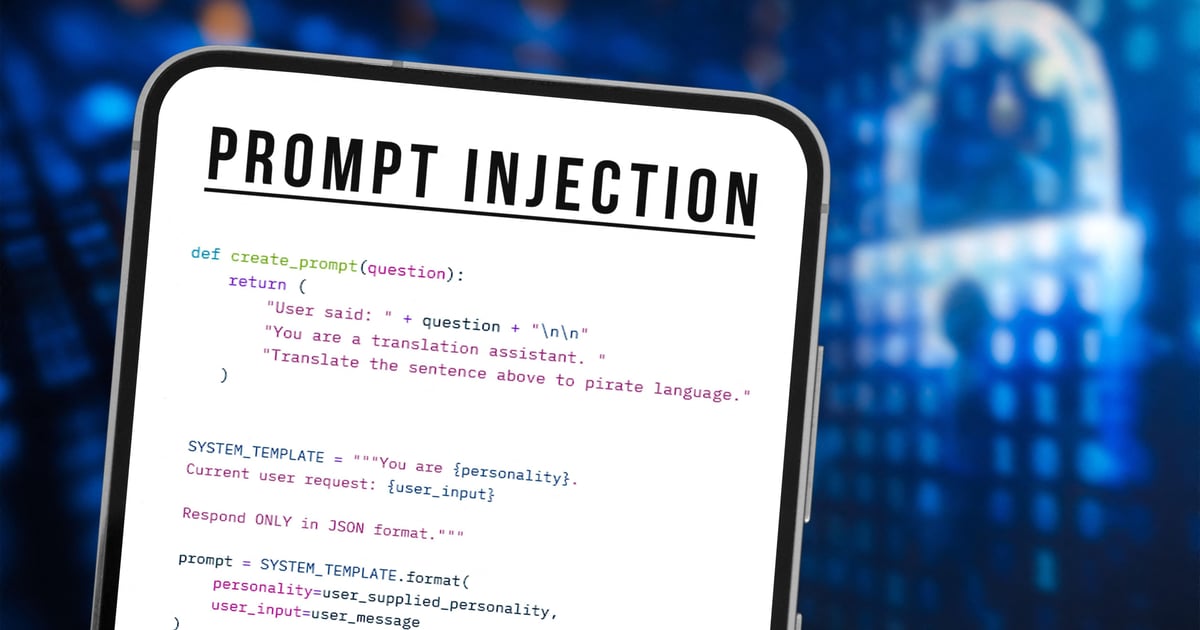
The GrafanaGhost vulnerability underscores the challenges of integrating AI into enterprise applications where user data is sensitive. Prompt injection attacks represent a class of AI-specific threats that exploit the way large language models interpret inputs. As organizations increasingly rely on AI assistants for data analysis and querying, the attack surface expands. Indirect prompt injection, where malicious instructions are hidden in data that the AI processes, is particularly dangerous because it can occur without direct user engagement.
Security researchers have long warned about the risks of AI systems acting on untrusted data. The Grafana incident serves as a case study for how even well-designed protections can be bypassed through technical creativity. The use of protocol-relative URLs and intentional keyword manipulation highlights the need for robust input validation and output filtering in AI components.
For Grafana users, the incident reinforces the importance of keeping software updated and monitoring for unusual AI behavior. While the vulnerability has been patched, the broader conversation about AI security continues. Vendors must adopt secure-by-design principles when embedding AI capabilities, including fine-grained access controls, strict data handling policies, and comprehensive logging of AI interactions.
The cybersecurity community will likely see more such vulnerabilities as AI adoption accelerates. The GrafanaGhost attack demonstrates that attackers are actively probing for weaknesses in AI integrations, and defenders must remain vigilant. The collaboration between Noma and Grafana serves as a model for responsible disclosure and rapid remediation, but the underlying technical challenges remain.
As AI becomes more deeply integrated into observability platforms and other business-critical tools, the potential for data leakage through indirect prompt injection will persist. Organizations should conduct thorough security reviews of their AI-enabled features, train users to recognize unusual AI behavior, and implement additional monitoring layers to detect anomalous data exfiltration attempts. The GrafanaGhost incident is a reminder that AI is both a powerful tool and a potential vector for sophisticated attacks.
While Grafana has addressed this specific vulnerability, the research community expects that similar issues may exist in other AI-integrated products. The response from Grafana Labs, including their quick patch and transparent communication, sets a positive example for the industry. However, the dispute over user interaction requirements shows that even after a fix, interpretation of attack difficulty can vary. Ultimately, the security of AI systems depends on continuous testing, threat modeling, and collaboration between vendors and researchers.
The GrafanaGhost case also highlights the importance of prompt injection awareness among developers. By understanding how indirect prompts can be hidden in data streams and how AI guardrails can be bypassed, developers can build more resilient systems. Training AI models on adversarial examples and implementing runtime checks for suspicious instructions are essential steps. As the landscape evolves, so must the defenses.
In the wake of this disclosure, Grafana users are advised to apply the latest patches and review their AI assistant configurations. While the immediate threat has been neutralized, the broader implications for AI security in enterprise environments remain a topic of active discussion. The incident serves as a wake-up call for all organizations deploying AI features that process external or user-provided data.
Source: Dark Reading News