

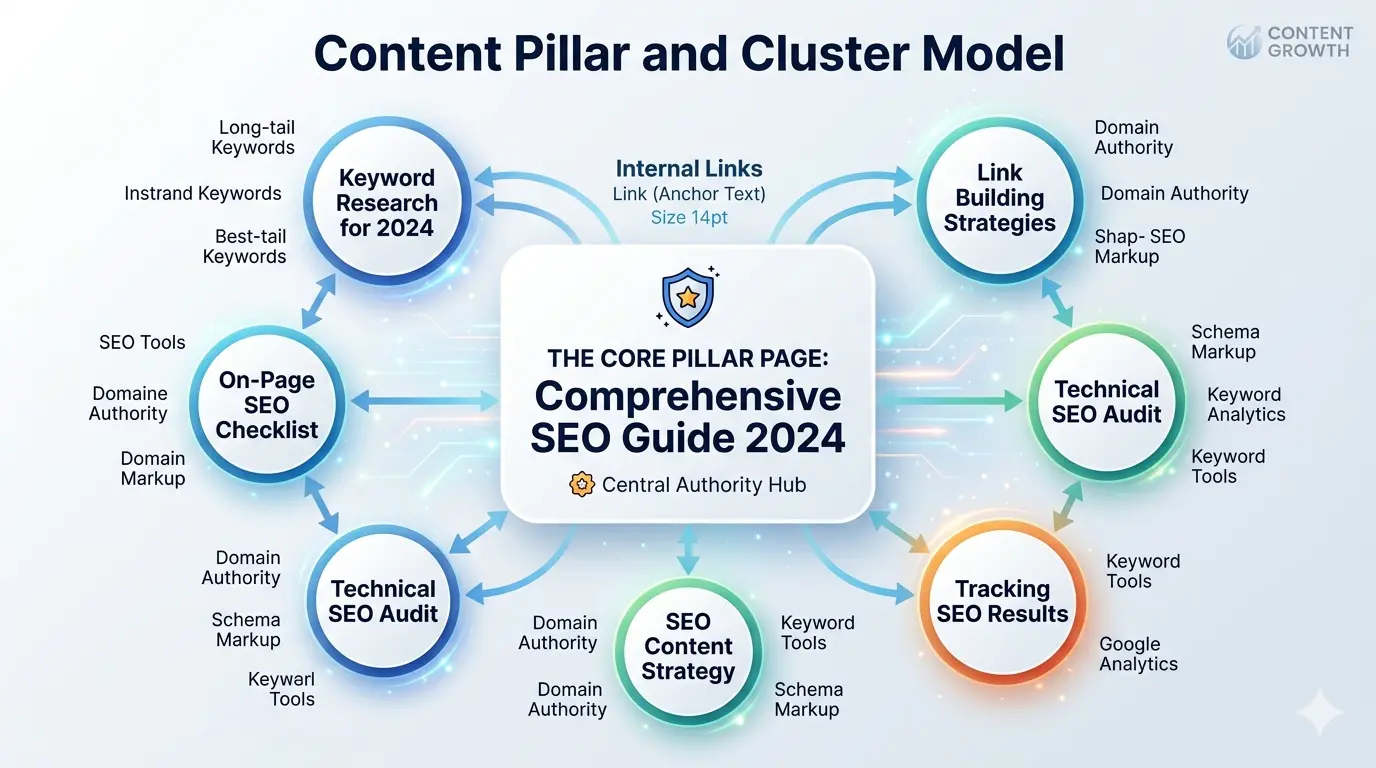
TL;DR: A pillar page is a comprehensive resource on a core topic, while content clusters are supporting articles that link back to it. This strategy organizes your site structure, helps search engines understand your topical authority, and boosts rankings by distributing link equity through a logical internal linking web.
I've been in the SEO trenches for over a decade, and if there is one thing I’ve learned, it’s that Google no longer just ranks pages; it ranks authority. You can't just throw 50 random blog posts at a wall and hope they stick. You need a centralized hub—a pillar—supported by a network of highly relevant sub-topics. This is where high-quality Guest Posting Services become your secret weapon, providing the external validation your cluster needs to actually move the needle.
What Is a Pillar Page and Content Cluster Strategy?
In simple terms, a pillar page is a "broad" piece of content that covers a specific topic in depth, and content clusters are the "deep" dives into specific sub-topics within that theme.
Definition: A content cluster is a group of related web pages that all link back to one central pillar page, signaling to search engines that the site has comprehensive expertise on a specific subject.
When you start using Manual Outreach Guest Posting, you aren't just getting a link; you're building a bridge. I like to think of the pillar page as the trunk of a tree, and the cluster content as the branches. Without a solid trunk, the branches have nothing to hold onto. Without the branches, the trunk looks pretty bare.
Why Topic Clusters Matter for SEO
Search intent has evolved. Users don't just want a list of tips; they want an ecosystem of information. In 2026, Google’s algorithms are looking for "Information Gain." They want to see that you aren't just repeating what everyone else said. By organizing your site into clusters, you make it incredibly easy for Google’s bots to crawl your site and understand your niche expertise.
What most people overlook is the power of shared equity. If one of your cluster posts goes viral or gets a massive boost from High Authority Backlinks, that "link juice" flows back to your pillar page. It lifts the entire boat. I’ve seen small sites outrank massive competitors simply because their internal linking was tighter and more logical.
How to Build Your Strategy Step-by-Step
Building this isn't rocket science, but it does require some manual labor and a bit of foresight. Here is the process I use for my clients:
Identify Your Core Pillar: Pick a broad topic that has enough depth to support at least 10–15 sub-topics. For us, that might be "Link Building Strategy."
Keyword Research for Clusters: Find specific questions or long-tail keywords. Instead of just "backlinks," look for "how to get Dofollow Guest Posts for SaaS."
Audit Existing Content: You probably already have half the cluster written. Map your old posts to your new pillar.
Create the Pillar Page: This should be a long-form piece (2,000+ words) that touches on every sub-topic but leaves the "how-to" details for the cluster posts.
Interlink Everything: Every cluster post must link to the pillar, and the pillar should link out to every cluster post.
Boost with External Outreach: Use White Hat Guest Posting to get links pointing directly to your pillar page. This anchors the entire strategy.
Expert Tip: Don't get paralyzed by keyword volume. Sometimes a cluster topic with only 50 searches a month is the exact "bridge" a user needs to move from a learner to a buyer. Focus on the journey, not just the stats.
The Counterintuitive Truth: Why "Perfect" Content Often Fails
Here's my hot take: most people spend way too much time making their pillar page "pretty" and not enough time making it functional. I’ve seen "ugly" pages with basic text and a few charts outrank flashy, interactive experiences. Why? Because the ugly page answered the user's question in the first paragraph.
In my experience, if you try to make your pillar page the "ultimate guide" that answers everything, you actually hurt your SEO. You want to leave gaps. Why? Because those gaps are what the cluster posts are for. If the pillar is too complete, there's no reason for the user to click deeper into your site. You want to pique interest, then provide the deep dive elsewhere.
What Actually Works in Guest Post Outreach
Let me be direct: automated outreach is dead. If you're sending the same template to 500 bloggers, you’re wasting your time. Success in Guest Post Link Building comes from being a human. I always tell my team to find one specific thing they liked about a site before emailing them.
When you're looking for Premium Guest Posting Sites, look for those that have an active comment section or a strong social following. A link from a site that actually has readers is worth ten times more than a link from a "zombie" site that only exists to sell posts.
Expert Tip: When you Buy Guest Posts, always ask for a sample of a recently published live link. If the content looks like it was written by a robot for a robot, run away. You want Niche Guest Posts that feel like they belong on the site.
Best Press Release Submission Platforms for SEO & Brand Visibility
While guest posting is the gold standard for authority, press release distribution sites play a massive role in creating a "news-worthy" footprint. When you launch a new pillar page, treating it like a major event can jumpstart your indexing. Using a press release agency helps you get featured on news distribution platforms that normally wouldn't look at a standard blog post.
The real secret sauce is the PR submission sites that offer syndicated reach. These provide a different type of backlink—one that signals "brand prominence" to Google. Online PR marketing isn't just about the immediate traffic; it's about the diversity of your link profile. A healthy mix of press release backlinks and High DA Guest Posting creates a natural-looking profile that is much harder for Google to penalize during an update.
People Most Asked about Pillar Pages
How long should a pillar page be?
There's no magic number, but most top-ranking pillars are between 1,500 and 3,000 words. The goal is to be comprehensive enough to cover the "what" and "why" while leaving the specific "how-to" for your cluster content.
Can one post be part of two clusters?
It might happen, but try to avoid it. It confuses the "thematic relevance" you're trying to build. If a post fits in two places, it’s probably too broad and should be split into two more specific pieces.
How many cluster posts do I need?
At least five to start. A "cluster" of two isn't really a cluster; it’s just a couple of related posts. To really show authority, aim for 10–15 pieces of supporting content over time.
Do I need Guest Post Backlinks for every cluster post?
Not necessarily. Focus your Guest Post Outreach efforts on the pillar page first. Once the pillar has high authority, that power will naturally trickle down to the cluster posts through your internal links.
Is guest posting for SEO still safe?
Yes, provided you're doing White Hat Guest Posting. This means manual outreach, high-quality content, and relevant sites. Avoid "link farms" and focus on building real relationships with other site owners.