

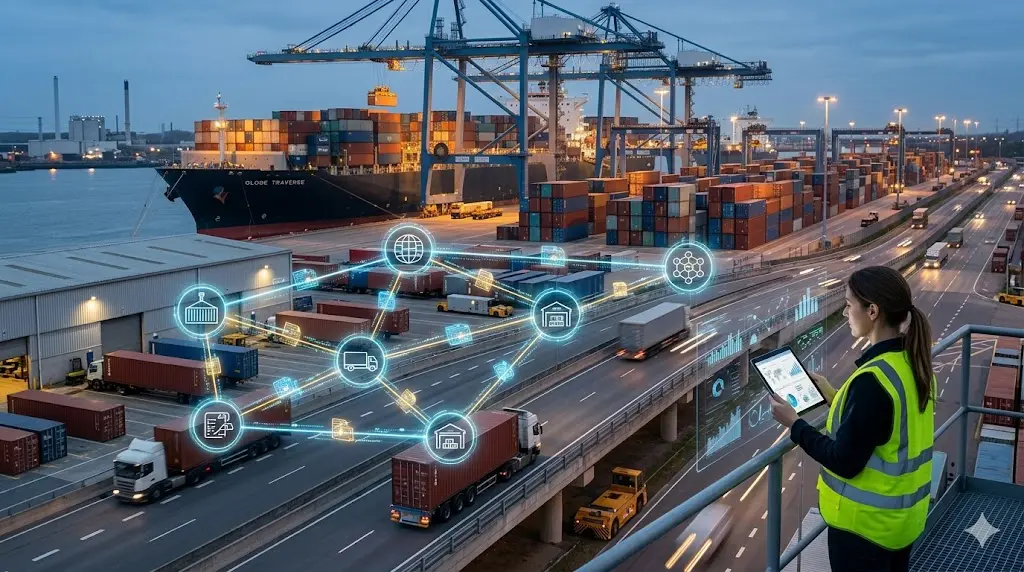
Blockchain supply chain adoption research findings suggest something interesting: most companies aren’t struggling with the technology itself, they’re struggling with coordination, trust between partners, and messy real-world logistics. When blockchain works in supply chains, it usually improves transparency, traceability, and accountability, but only after serious operational changes.
Here’s the thing. The hype makes it sound like blockchain instantly fixes broken supply chains. In reality, research shows it behaves more like a slow infrastructure upgrade that forces everyone to align or drop out.
Blockchain in supply chains mainly improves traceability, reduces fraud, and increases data consistency across multiple parties. However, adoption remains uneven because companies face integration costs, data-sharing resistance, and lack of shared standards. Most successful cases appear in regulated industries like pharmaceuticals and food logistics.
What Is Blockchain Supply Chain Adoption Research Findings?
Blockchain supply chain adoption refers to the study of how distributed ledger technology is being implemented across logistics and production networks to improve transparency and trust between stakeholders.
Research in this space looks at real-world pilots, enterprise deployments, and cross-industry experiments. What stands out is that adoption isn’t driven purely by innovation—it’s driven by pressure. Regulators, consumers, and large buyers are often the ones pushing companies toward blockchain-based tracking systems.
From what I’ve seen across multiple studies, adoption tends to cluster around industries where mistakes are expensive or highly visible. If a shipment error can cost lives or destroy brand reputation, blockchain suddenly feels less optional.
One unexpected finding is that smaller suppliers often resist more than large corporations. Not because they don’t understand the value, but because they fear losing control over sensitive operational data.
Why Blockchain Supply Chain Adoption Matters in 2026
By 2026, global supply chains are more fragmented than ever. Multiple sourcing hubs, geopolitical disruptions, and climate-related logistics shocks have made visibility a survival tool rather than a competitive advantage.
Research findings show that blockchain adoption matters most in three ways. First, it reduces reconciliation errors between parties who don’t trust each other’s databases. Second, it improves audit readiness because every transaction is time-stamped and verifiable. Third, it creates what researchers call “shared truth infrastructure,” where no single company owns the entire dataset.
Let me be direct. Most companies don’t adopt blockchain because it’s cool. They adopt it because they got burned by missing goods, counterfeit parts, or compliance failures.
An interesting twist is that in some cases blockchain actually slows down operations initially. That sounds counterintuitive, but early-stage systems require stricter data entry and validation, which adds friction before efficiency gains appear.
How Blockchain Supply Chain Adoption Works Step by Step
Understanding adoption is easier when broken into operational stages rather than abstract theory.
Step 1: Mapping the supply network
Companies first identify every node in their supply chain, from raw material suppliers to last-mile distributors. This step often reveals gaps people didn’t even know existed.
Step 2: Defining shared data standards
Here’s where things get tricky. Every participant needs to agree on what data gets recorded and how. Without this, blockchain becomes just another siloed database.
Step 3: Choosing permission structures
Most supply chains don’t use fully open blockchains. Instead, they rely on permissioned systems where only verified participants can write data.
Step 4: Integrating IoT and tracking systems
Sensors, scanners, and ERP systems feed real-time data into the blockchain. This is where physical goods finally connect to digital records.
Step 5: Running pilot programs
Research consistently shows that successful adoption almost always starts small. A single product line or geographic route is tested before scaling.
Step 6: Scaling across partners
This is where adoption often stalls. Scaling requires every partner, even reluctant ones, to join the same system.
Common Misconception: Blockchain automatically guarantees data accuracy
Blockchain doesn’t fix bad data—it preserves it. If incorrect information enters the system, it becomes permanently recorded. This is one of the most misunderstood findings in supply chain research, and honestly, it catches a lot of executives off guard.
Expert Insights: What Actually Works in Real Supply Chains
In my experience reviewing enterprise adoption reports, the biggest success factor isn’t technology—it’s governance. Companies that define clear accountability rules before deployment tend to succeed far more often.
What most people overlook is that blockchain is less about replacing systems and more about forcing alignment between organizations that were never fully synchronized in the first place.
Another thing I’ve noticed is that the best-performing implementations are surprisingly boring. No flashy dashboards, no overcomplicated AI layers—just clean, consistent tracking of goods across trusted partners.
Here’s a hot take that might sound a bit controversial: blockchain doesn’t create trust in supply chains, it exposes where trust was already missing. That distinction changes how you interpret almost every research finding in this space.
Real-World Research Patterns in Blockchain Supply Chains
Across multiple case studies in logistics and manufacturing, some patterns show up repeatedly.
In food supply chains, blockchain helps reduce contamination tracking time from days to minutes. In pharmaceuticals, it helps fight counterfeit drugs by verifying batch origin. In automotive supply chains, it improves part authenticity tracking, especially in multi-tier vendor systems.
One widely cited analysis by organizations such as the World Economic Forum highlights that traceability improvements often come faster than cost savings. In other words, companies see visibility benefits before financial ROI.
What’s interesting is that companies expecting immediate cost reduction tend to abandon projects early, while those focused on compliance or risk reduction tend to stay the course longer.
Expert Tip: Adoption Fails More from People Issues Than Tech
Most blockchain supply chain failures don’t happen because of technical limitations. They happen because partners don’t want to share data at the required level of transparency. When one weak link refuses participation, the entire system becomes less effective.
That’s why successful projects often start with tight-knit consortiums rather than open-ended networks.
Barriers Highlighted in Blockchain Supply Chain Research
Research findings consistently point to a few recurring barriers.
Data standardization remains a major issue. Without unified formats, blockchain records become inconsistent across systems. Integration complexity is another barrier, especially for older ERP systems that weren’t designed for real-time data sharing.
Then there’s the cost factor. While blockchain can reduce inefficiencies long-term, initial setup costs and training requirements are still high enough to discourage smaller firms.
A less obvious barrier is psychological. Some companies feel uncomfortable sharing operational visibility with competitors, even indirectly. That hesitation slows down network-wide adoption more than any technical limitation.
Unexpected Insight: Blockchain Can Increase Risk Visibility Too Quickly
One surprising research finding is that blockchain sometimes creates “transparency shock.” Companies suddenly see inefficiencies and fraud patterns they were previously unaware of. While this sounds positive, it can create internal disruption because it forces rapid accountability changes.
In several studies, managers reported that the technology didn’t just reveal supply chain problems—it forced organizational restructuring faster than expected.
Expert Tip: Start With Traceability, Not Transformation
Organizations that try to rebuild entire supply chains around blockchain often struggle. Those that focus only on traceability first tend to scale more smoothly later.
That’s because traceability delivers visible wins without requiring full system redesign.
People Also Ask About Blockchain Supply Chain Adoption
Why is blockchain used in supply chains?
Blockchain is used mainly to improve transparency and traceability across multiple organizations. It helps ensure that data about goods remains consistent as products move through complex logistics networks.
What industries benefit most from blockchain supply chain systems?
Industries like pharmaceuticals, food production, and automotive manufacturing benefit the most because they require strict verification and high accountability across suppliers.
What is the biggest challenge in blockchain adoption for supply chains?
The biggest challenge is not technical—it’s coordination between different organizations that have conflicting incentives and data-sharing concerns.
Does blockchain reduce supply chain costs?
It can reduce long-term costs by minimizing fraud and inefficiencies, but initial implementation costs often delay financial benefits.
Is blockchain replacing traditional supply chain systems?
No, it usually works alongside existing systems, acting as a shared verification layer rather than a full replacement.
If you’re aiming to strengthen brand visibility and drive organic traffic through authoritative outreach, our Network site provide related offering Guest Posting Services and Press Release News Submission, seo and local business listing in uk. You can explore press release distribution services alongside digital marketing services to boost high authority backlinks, improve SEO ranking, and secure consistent media coverage across competitive niches. These platforms are designed for businesses, startups, and agencies looking for instant publishing and scalable PR distribution results.