

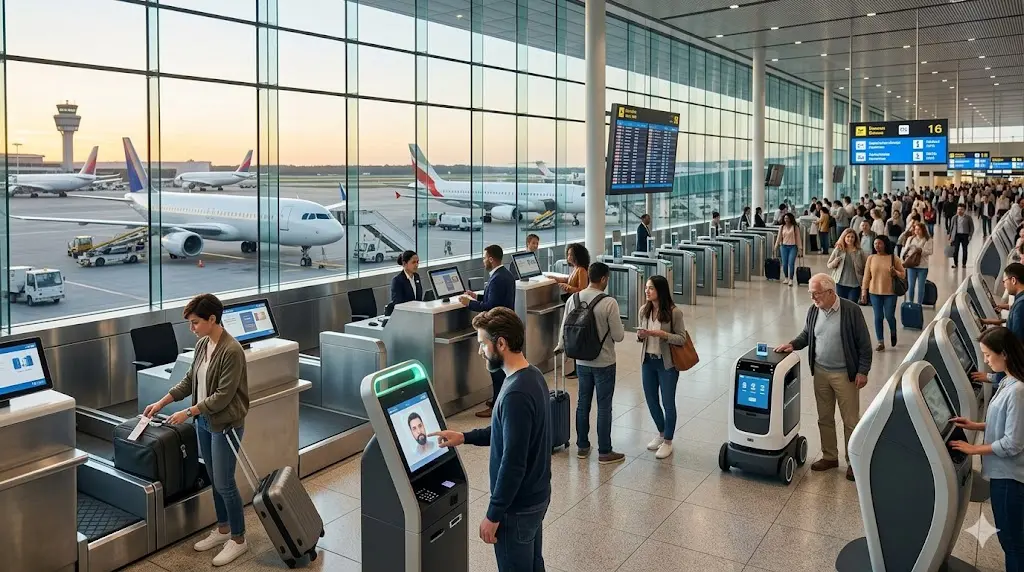
Why Automation Is Reshaping the Global Tourism Industry comes down to one simple reality: travelers expect faster, smoother, and more personalized experiences. Automation helps tourism businesses improve efficiency, reduce operational costs, enhance customer service, and deliver seamless travel experiences from booking to post-trip engagement.
Why Automation Is Reshaping the Global Tourism Industry is a question that deserves attention as technology continues to transform the way people travel. Whether you're booking a flight, checking into a hotel, receiving travel updates, or getting recommendations for local attractions, automation is increasingly working behind the scenes.
Travelers today want convenience. They don't want long waiting times, repetitive paperwork, or complicated booking procedures. Tourism businesses understand this shift and are investing heavily in automated solutions to meet changing expectations.
Here's the thing: automation isn't just about replacing manual tasks. It's about creating better travel experiences while helping businesses operate more efficiently. As we move through 2026, automation is becoming one of the strongest forces shaping the future of global tourism.
What Is Automation in the Tourism Industry?
Automation: The use of technology and software to perform tasks, processes, and services with minimal human intervention.
Within tourism, automation appears in many forms. Online booking systems automatically process reservations. Chatbots answer customer questions. Smart hotel systems manage room settings. Automated payment solutions speed up transactions.
What makes automation particularly valuable is its ability to handle repetitive tasks consistently and efficiently.
Years ago, travelers often needed direct assistance for almost every step of a journey. Today, many of those interactions happen instantly through automated systems.
This transformation has fundamentally changed how tourism businesses operate and how travelers experience destinations.
Why Automation Matters in 2026
The tourism sector faces increasing pressure to provide better experiences while controlling operational costs.
Automation helps solve both challenges.
In 2026, travelers expect instant responses. They want immediate booking confirmations, personalized recommendations, real-time travel updates, and efficient customer support. Meeting these expectations manually becomes difficult as travel demand grows.
Automation provides scalability.
A hotel can process thousands of bookings without significantly increasing staff. Airlines can automatically notify passengers about schedule changes. Tourism operators can manage customer inquiries around the clock.
What most people overlook is that automation also improves consistency.
Human service can vary depending on workload, staffing levels, or time of day. Automated systems deliver predictable performance and reliable information.
That's becoming increasingly important as travelers compare experiences across multiple providers.
Expert Tip
Tourism businesses should focus on using automation to enhance customer experiences rather than simply reducing labor costs. Travelers notice the difference quickly.
How Automation Improves the Traveler Journey: Step by Step
Automation influences nearly every stage of modern travel.
Step 1: Travel Inspiration and Research
Automated recommendation engines help travelers discover destinations based on interests, previous trips, and browsing behavior.
Instead of searching endlessly, travelers receive personalized suggestions that match their preferences.
Step 2: Booking and Reservations
Automated booking platforms process reservations instantly.
Flights, accommodations, transportation, and activities can often be booked within minutes.
This speed improves customer satisfaction while reducing administrative workload.
Step 3: Pre-Trip Communication
Travelers receive automated reminders, itinerary updates, weather information, and travel alerts.
These communications reduce uncertainty and improve preparation.
Step 4: On-Site Experience
Automated check-in systems, digital room access, self-service kiosks, and smart travel applications simplify the travel experience.
Guests spend less time waiting and more time enjoying their trip.
Step 5: Customer Support
Automated chat systems provide assistance twenty-four hours a day.
Many common questions can be answered immediately without requiring human intervention.
Step 6: Post-Trip Engagement
After a journey ends, automated follow-up systems gather feedback, encourage reviews, and recommend future travel opportunities.
This helps businesses maintain long-term customer relationships.
How Automation Is Transforming Hotels
Hotels are among the biggest adopters of automation technologies.
Guests increasingly expect frictionless experiences.
Automated check-in and check-out systems reduce waiting times at reception desks. Smart room controls allow guests to adjust lighting, temperature, and entertainment systems through mobile devices.
Revenue management systems automatically adjust room pricing based on demand patterns and market conditions.
I've personally noticed that many travelers now view digital convenience as part of overall service quality. Fast service often matters as much as luxury amenities.
That shift is influencing investment decisions throughout the hospitality industry.
Expert Tip
Hotel automation works best when it gives guests choices. Some travelers prefer self-service, while others still appreciate personal interaction.
How Airlines Are Benefiting from Automation
Airlines operate in one of the most complex sectors of tourism.
Managing schedules, passengers, baggage, maintenance, and communication requires enormous coordination.
Automation helps handle this complexity.
Passengers receive automated boarding notifications, gate updates, and flight status alerts. Self-service check-in systems reduce airport congestion. Automated baggage tracking improves visibility and reduces uncertainty.
Behind the scenes, airlines use automated systems to optimize routes, forecast demand, and manage operational resources.
These improvements contribute to smoother travel experiences and better operational performance.
The Rise of Personalized Travel Experiences
One of the most significant effects of automation is personalization.
Modern travelers don't want generic experiences.
They expect recommendations tailored to their interests, budgets, and travel history.
Automated systems analyze traveler preferences and behavior to deliver customized suggestions.
A traveler interested in cultural attractions may receive different recommendations than someone focused on adventure tourism.
This level of personalization would be difficult to achieve consistently through manual processes alone.
In many cases, automation actually makes travel feel more personal rather than less personal.
That's a surprisingly counterintuitive outcome.
Case Study: A Mid-Sized Resort Improves Guest Satisfaction
Consider a hypothetical beach resort struggling with long check-in lines and delayed customer responses.
Management introduces automated booking confirmations, mobile check-in capabilities, and a digital concierge service.
Within months, guest wait times decrease significantly. Customer satisfaction scores improve. Staff members spend less time on routine administrative tasks and more time assisting guests with complex requests.
This example illustrates an important point.
Automation often frees employees to focus on higher-value interactions rather than replacing human service entirely.
How Automation Supports Sustainable Tourism
Sustainability remains a growing priority across tourism markets.
Automation contributes in several practical ways.
Smart energy management systems reduce electricity consumption in hotels. Automated resource monitoring helps businesses identify waste. Digital documentation reduces paper usage.
Transportation providers use automated route optimization to improve fuel efficiency and reduce emissions.
Small improvements across thousands of tourism businesses can create meaningful environmental benefits.
What most people miss is that sustainability and efficiency often go hand in hand.
Automation supports both objectives simultaneously.
Expert Tip
When evaluating automation investments, tourism businesses should measure environmental impact alongside operational performance.
Common Mistake or Misconception
Automation Eliminates the Need for Human Service
This is probably the biggest misconception in tourism.
Automation doesn't automatically remove the need for people.
Travel remains deeply emotional and personal. Travelers often need reassurance, problem-solving, empathy, and local expertise.
Technology handles routine tasks effectively.
Humans excel at managing complex situations and creating memorable experiences.
The most successful tourism businesses combine both strengths.
Relying entirely on automation can actually reduce customer satisfaction if travelers feel disconnected or unsupported.
Balance matters.
The Challenges of Tourism Automation
While automation offers significant benefits, it also presents challenges.
Technology implementation requires investment.
Staff training becomes essential. System failures can disrupt operations. Some travelers may feel uncomfortable with highly automated environments.
Privacy concerns also deserve attention.
Travel businesses collect large amounts of customer data to power automated systems and personalized services.
Responsible data management is becoming increasingly important.
I've seen companies rush into automation projects without fully considering customer expectations. In many cases, the technology worked perfectly, but guests still preferred a more balanced experience.
That's a valuable lesson.
Automation should solve problems, not create new frustrations.
Expert Tips: What Actually Works
If you're involved in tourism management, here's my hot take.
Many businesses focus too much on automation itself and not enough on the customer experience.
Travelers rarely care whether a process is automated.
They care whether it's convenient.
The best automation often goes unnoticed because it removes friction without drawing attention to itself.
In my experience, businesses achieve better results when they automate repetitive processes while preserving meaningful human interactions.
Technology should support relationships, not replace them.
Organizations that understand this principle will likely outperform competitors as tourism continues evolving.
Expert Tip
Before automating any process, ask one question: Does this make the traveler's experience easier? If the answer isn't clear, reconsider the approach.
People Most Asked About Automation in Tourism
How does automation improve tourism services?
Automation improves tourism services by reducing wait times, increasing efficiency, providing personalized experiences, and enabling faster communication between businesses and travelers.
Why is automation becoming important in tourism?
Traveler expectations continue to rise. Automation helps businesses deliver faster, more convenient, and more consistent services while managing operational costs.
Can automation improve customer satisfaction?
Yes. When implemented effectively, automation reduces friction and simplifies travel experiences, leading to higher customer satisfaction levels.
Does automation replace tourism jobs?
Not necessarily. Automation often shifts employee responsibilities toward customer engagement, problem-solving, and specialized services rather than eliminating positions entirely.
What are examples of tourism automation?
Examples include automated booking systems, self-service check-in kiosks, chatbots, smart hotel technologies, automated pricing systems, and personalized recommendation engines.
How does automation support sustainable tourism?
Automation reduces waste, improves resource efficiency, optimizes transportation routes, and supports smarter energy management practices.
What challenges come with automation?
Challenges include implementation costs, training requirements, system reliability concerns, data privacy issues, and balancing automation with human interaction.
What is the future of automation in tourism?
Future developments will likely include more personalized experiences, predictive customer service, intelligent travel planning, and deeper integration of automated technologies across the traveler journey.
Final Thoughts
Why Automation Is Reshaping the Global Tourism Industry is ultimately about creating better travel experiences while helping businesses operate more efficiently. From booking and customer support to personalized recommendations and sustainable operations, automation is influencing nearly every aspect of modern tourism.
As technology continues advancing, automation will become even more integrated into travel experiences. Yet the most successful tourism organizations won't simply automate everything. They'll combine intelligent technology with meaningful human service.
Travelers want convenience. They want speed. They want personalization.
But they also want connection.
The future of tourism belongs to businesses that understand how to deliver both.
Boost your online growth with business press release services and professional SEO services designed to help businesses, startups, agencies, and marketers increase brand visibility across competitive markets. Gain high authority backlinks, stronger SEO ranking, expanded media coverage, and consistent organic traffic through instant publishing opportunities and strategic search optimization solutions that deliver measurable results and long-term digital authority.