

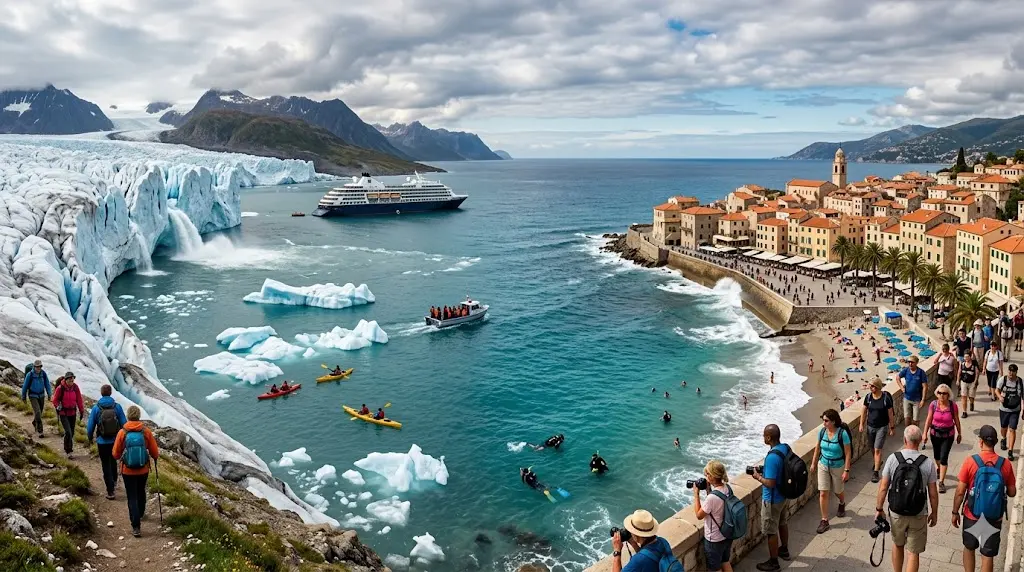
Global Tourism Trends Related to Climate Change are transforming how people travel, where they travel, and what they expect from destinations. Rising temperatures, extreme weather events, sustainability concerns, and changing traveler preferences are pushing the tourism industry to adapt faster than ever before.
Global Tourism Trends Related to Climate Change are becoming impossible to ignore. Travelers, tourism businesses, governments, and destination managers are all facing a new reality where environmental conditions directly influence travel decisions. Heatwaves, rising sea levels, changing wildlife patterns, and unpredictable weather are affecting some of the world's most popular tourism destinations.
At the same time, travelers are becoming more aware of their environmental impact. Many are seeking greener transportation options, eco-friendly accommodations, and destinations that prioritize sustainability. Climate change is no longer a topic discussed only by scientists and policymakers. It has become a major factor shaping the future of global tourism in 2026 and beyond.
What Are Global Tourism Trends Related to Climate Change?
Climate Change Tourism Trends: Long-term shifts in traveler behavior, destination management, tourism operations, and industry strategies that occur as a result of changing environmental and climate conditions.
Climate change affects tourism in multiple ways.
Some destinations face declining visitor numbers because environmental conditions have become less favorable. Others are experiencing increased interest due to changing seasonal patterns.
Tourism trends connected to climate change include sustainable travel choices, climate-conscious destination selection, carbon reduction initiatives, eco-tourism growth, and increased investment in climate resilience.
Here's the thing: tourism depends heavily on environmental stability.
Beautiful beaches, snow-covered mountains, healthy ecosystems, and comfortable weather conditions are often major reasons people travel. When those factors change, tourism patterns change as well.
That's exactly what we're seeing across many regions of the world.
Why Global Tourism Trends Related to Climate Change Matter in 2026
The tourism industry in 2026 faces a unique challenge.
Demand for travel remains strong, yet environmental conditions continue evolving.
Many destinations now experience longer heatwaves, shifting rainfall patterns, stronger storms, and increased environmental stress. Travelers are noticing these changes.
What most people overlook is that climate change doesn't simply affect destinations. It also affects traveler psychology.
People are becoming more selective.
They want reassurance that destinations are safe, sustainable, and prepared for environmental challenges.
In my experience, travelers increasingly research environmental conditions before booking trips. Ten years ago, travelers mostly focused on attractions and pricing. Today, climate factors often influence decision-making as well.
This shift is creating new opportunities for destinations willing to adapt.
It's also creating significant challenges for those that don't.
Expert Tip
Destinations that invest in sustainability, climate resilience, and transparent environmental communication are likely to build stronger traveler trust in the years ahead.
How Climate Change Is Influencing Tourism Decisions Step by Step
Climate change affects travel choices in ways that many travelers don't even realize.
Step 1: Travelers Evaluate Environmental Conditions
Before booking, travelers increasingly consider seasonal weather patterns, temperature forecasts, and environmental risks.
Heatwaves, flooding concerns, and wildfire activity can significantly influence destination choices.
Safety matters.
Comfort matters too.
Step 2: Sustainable Travel Becomes a Priority
Many travelers now look for accommodations and experiences that align with environmental values.
They may choose eco-certified lodging, responsible tour operators, or destinations known for conservation efforts.
Sustainability has moved from a niche interest to a mainstream consideration.
Step 3: Alternative Destinations Gain Popularity
Some traditionally popular destinations face environmental pressures that reduce their appeal during certain seasons.
As a result, travelers are discovering lesser-known regions that offer similar experiences with fewer climate-related concerns.
This trend is reshaping tourism demand patterns worldwide.
Step 4: Travel Seasons Begin to Shift
Climate change is altering traditional tourism seasons.
Destinations once considered ideal during peak summer months may become less attractive due to extreme heat.
Meanwhile, shoulder seasons often become more appealing.
This creates new opportunities for tourism businesses.
Step 5: Travelers Seek Nature-Based Experiences
Interest in eco-tourism, conservation tourism, and nature-focused travel continues growing.
Many travelers want meaningful experiences connected to environmental awareness and sustainability.
That demand is encouraging destinations to invest in responsible tourism initiatives.
Step 6: Climate Awareness Influences Long-Term Travel Habits
Travelers are becoming more conscious of transportation choices, travel frequency, and environmental impact.
While convenience remains important, sustainability considerations increasingly influence planning decisions.
How Destinations Are Adapting to Climate Change
Tourism destinations cannot control global climate patterns, but they can adapt.
Many are investing in infrastructure improvements designed to withstand extreme weather conditions.
Others are developing sustainability programs to protect natural resources.
A coastal destination, for example, may strengthen shoreline protection measures while promoting responsible tourism practices.
A mountain resort facing shorter snow seasons might diversify its offerings with year-round outdoor activities.
These adaptations help destinations remain competitive despite environmental challenges.
What matters most is proactive planning.
Waiting for problems to appear usually creates bigger challenges later.
Expert Tip
Tourism leaders should focus on resilience as much as sustainability. Reducing environmental impact is valuable, but preparing for unavoidable climate changes is equally important.
The Rise of Sustainable Tourism
One of the most significant global tourism trends related to climate change is the growth of sustainable tourism.
Travelers increasingly want experiences that support local communities and minimize environmental harm.
Sustainable tourism isn't just about reducing emissions.
It's about creating long-term value for destinations, residents, and visitors.
Many accommodations now implement energy-efficient operations.
Tour operators often emphasize conservation efforts.
Destinations promote responsible visitor behavior.
These initiatives are becoming major differentiators in competitive tourism markets.
From what I've seen, travelers are willing to support businesses that demonstrate genuine environmental commitment.
Authenticity matters.
Greenwashing doesn't.
How Climate Change Is Reshaping Popular Destinations
Climate change affects destinations differently.
Some regions experience warmer temperatures that extend tourism seasons.
Others face conditions that make travel less comfortable or more unpredictable.
A realistic example helps illustrate this.
Imagine a beach destination known for pleasant summer weather. Over time, average temperatures rise significantly, making peak season less appealing.
Visitors begin traveling during spring and autumn instead.
Local businesses adjust pricing, staffing, and marketing strategies accordingly.
That's not a hypothetical situation in many parts of the world anymore.
It's becoming reality.
Tourism industries that recognize these changes early often adapt more successfully.
The Growing Importance of Eco-Tourism
Eco-tourism continues gaining momentum as travelers seek deeper connections with nature.
Many visitors want more than sightseeing.
They want educational experiences, conservation involvement, and opportunities to contribute positively to destinations.
Eco-tourism supports this demand.
Activities may include wildlife observation, conservation programs, guided nature experiences, and community-based tourism projects.
The interesting part is that eco-tourism often attracts travelers who spend more time learning about destinations rather than simply consuming attractions.
That creates value beyond economic benefits.
It also encourages environmental stewardship.
Common Misconception: Climate Change Only Creates Negative Tourism Outcomes
Many discussions focus exclusively on challenges.
Certainly, challenges exist.
However, that's not the entire story.
Climate change also creates opportunities for innovation and adaptation.
Some destinations are developing new tourism products.
Others are expanding shoulder seasons.
Many businesses are improving operational efficiency through sustainability initiatives.
Here's my slightly unpopular opinion: the tourism industry often becomes more creative when facing pressure.
Innovation frequently accelerates during periods of change.
While climate-related challenges shouldn't be minimized, adaptation can create positive outcomes as well.
How Technology Supports Climate-Conscious Tourism
Technology plays a growing role in helping tourism respond to climate change.
Advanced forecasting systems help travelers make informed decisions.
Data analytics support resource management.
Smart infrastructure improves energy efficiency.
Digital tools also help destinations monitor visitor impacts and environmental conditions.
A tourism operator can use real-time data to reduce waste, optimize transportation, and improve sustainability performance.
These improvements benefit both businesses and travelers.
Technology won't solve every climate challenge.
Still, it provides valuable tools for adaptation.
Expert Tip
Invest in technologies that improve operational efficiency and environmental monitoring. Small improvements often create significant long-term benefits.
Expert Tips: What Actually Works
After observing tourism trends over the past several years, one lesson stands out.
Travelers increasingly reward destinations that communicate honestly.
People understand that climate change is complex.
They don't expect perfection.
What they do expect is transparency.
I once followed a case where a destination openly discussed environmental challenges while outlining its sustainability initiatives.
Rather than damaging visitor interest, transparency strengthened trust.
Visitors appreciated the honesty.
Here's what most guides miss: sustainability messaging works best when supported by visible action.
Travelers can usually tell the difference between genuine commitment and marketing language.
Actions speak louder than slogans.
Always have.
What Does the Future Hold for Climate-Related Tourism Trends?
Future tourism trends will likely involve greater environmental awareness and adaptation.
Travel seasons may continue shifting.
Sustainable transportation options could become more important.
Destination resilience will likely receive greater investment.
Travelers may increasingly prioritize experiences that support environmental protection and community well-being.
Tourism businesses that adapt proactively will probably perform better than those relying on outdated assumptions.
One thing seems clear.
Climate considerations are becoming a permanent part of tourism planning.
The conversation isn't going away.
People Most Asked About Global Tourism Trends Related to Climate Change
How does climate change affect tourism?
Climate change affects tourism through changing weather patterns, extreme weather events, environmental degradation, and shifting traveler preferences. These factors influence destination popularity and travel behavior.
What is sustainable tourism?
Sustainable tourism focuses on minimizing environmental impacts while supporting local communities and preserving cultural and natural resources for future generations.
Why are travelers becoming more climate-conscious?
Many travelers are increasingly aware of environmental issues and want their travel choices to align with personal values regarding sustainability and responsible tourism.
Which tourism sectors are most affected by climate change?
Coastal tourism, winter sports tourism, wildlife tourism, and nature-based tourism are among the sectors most directly affected by changing environmental conditions.
Can tourism help address climate change?
Tourism can contribute through sustainable practices, conservation initiatives, resource efficiency improvements, and support for environmentally responsible businesses and destinations.
What is eco-tourism?
Eco-tourism involves responsible travel experiences focused on nature, conservation, education, and supporting local communities while minimizing environmental impact.
How are destinations adapting to climate change?
Destinations are investing in climate resilience, sustainable infrastructure, resource management, environmental protection programs, and diversified tourism offerings.
Will climate change permanently change tourism patterns?
Many experts believe climate change will continue influencing tourism patterns through altered travel seasons, destination preferences, and increasing demand for sustainable travel experiences.
Final Thoughts
Global Tourism Trends Related to Climate Change are reshaping how destinations operate, how businesses serve travelers, and how people plan their journeys. Climate change is influencing travel decisions, sustainability initiatives, tourism seasons, and destination management strategies across the world.
Organizations that embrace adaptation, resilience, and responsible tourism practices will be better positioned for future success. As environmental awareness continues growing, climate-conscious tourism is likely to become one of the defining characteristics of the global travel industry for years to come.
Strengthen your online presence with business press release services and SEO services that help brands earn high authority backlinks, increase brand visibility, improve SEO ranking, and drive qualified organic traffic. Designed for businesses, agencies, startups, bloggers, and SEO professionals, these solutions deliver wider media coverage and instant publishing opportunities that support measurable digital growth.