

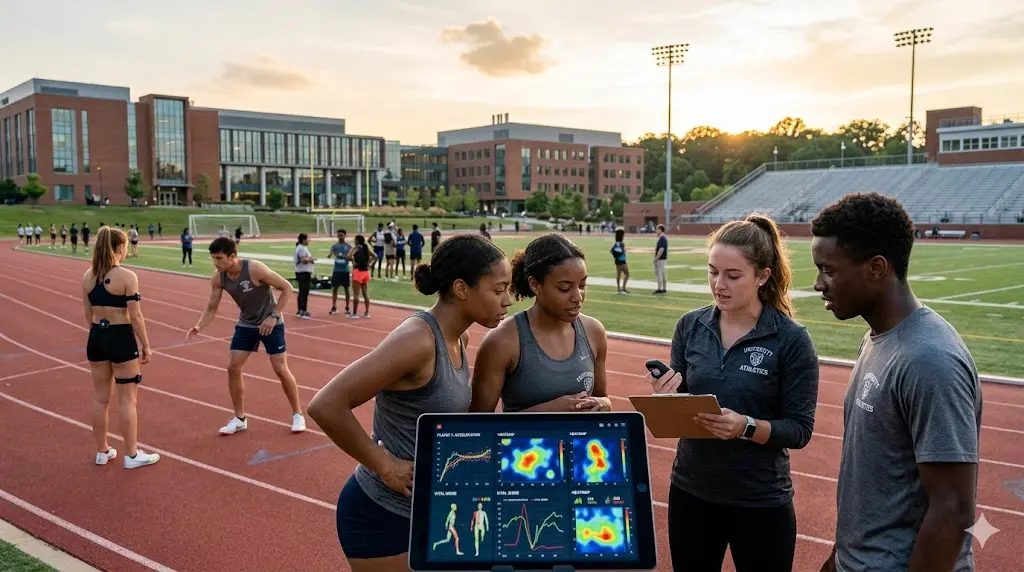
Sports analytics is transforming higher education worldwide by reshaping how universities teach, train, and prepare students for data-driven careers. It’s no longer just about athletes or coaches making instinct-based decisions. Now, data sits at the center of performance, recruitment, and even academic research. If you’ve noticed universities suddenly investing in analytics labs and sports science programs, that’s not random—it’s a response to a rapidly changing industry.
What’s interesting is how deeply this shift is bleeding into education itself. Courses are evolving, internships are changing, and students are graduating with skills that didn’t even exist a decade ago.
Sports analytics is changing higher education by integrating data science into sports programs, improving decision-making in athletics, and preparing students for high-demand careers. Universities now treat sports data as a core academic discipline, blending technology, performance science, and real-world application.
What Is Sports Analytics in Higher Education?
Sports analytics in higher education refers to the use of data analysis, statistical modeling, and technology within academic sports programs to study athlete performance, team strategy, and sports business decisions.
It sounds technical, but here’s the simpler version: universities are now treating sports like a data laboratory. Every sprint, pass, injury pattern, and training session can be measured, analyzed, and improved.
In most cases, this field sits at the intersection of computer science, sports science, and business studies. Students don’t just learn theory—they work with real datasets from teams, simulations, and wearable tracking systems.
And honestly, here’s what most people miss: sports analytics isn’t just about improving athletes. It’s about training a new generation of data professionals who can work across industries.
Why Sports Analytics Matters in Higher Education
In 2026, universities are under pressure to produce graduates who can actually do things, not just talk about them. Sports analytics fits perfectly into that shift.
Sports departments are becoming testbeds for innovation. You’ve got machine learning predicting injuries, AI tracking player fatigue, and dashboards guiding coaching decisions. It’s messy sometimes, but that’s where real learning happens.
From what I’ve seen, universities that adopt sports analytics early tend to attract more industry partnerships. Companies want access to talent who already understand real-world data problems, not just textbook examples.
And here’s a slightly uncomfortable truth: traditional sports education without analytics is starting to feel outdated in many institutions.
How Universities Are Integrating Sports Analytics — Step by Step
Let me be direct. Most universities don’t roll this out smoothly. It usually evolves in stages.
Step 1: Building Data Infrastructure
Universities start by installing tracking systems, video analysis tools, and data storage platforms. Without data, nothing else works.
Step 2: Training Faculty and Coaches
This is where things get tricky. Some coaches embrace analytics instantly. Others resist it because it challenges experience-based decision-making.
Step 3: Introducing Interdisciplinary Courses
Students from computer science, sports science, and business are brought together. That mix creates friction—but also innovation.
Step 4: Real-World Team Projects
Students analyze actual team performance data or simulate scouting decisions. This is where theory turns into practice.
Step 5: Industry Collaboration
Universities partner with sports organizations, analytics firms, and performance labs to give students real exposure.
Step 6: Career Path Integration
Graduates move into roles like performance analysts, sports data consultants, or even AI sports model developers.
Common Misconception: “It’s Just for Elite Athletes”
A lot of people think sports analytics only benefits professional teams. That’s not true. In reality, it’s equally valuable for amateur sports, injury prevention, and even physical education programs. I’ve seen smaller universities get more impact from analytics than big-name programs because they’re more flexible
Expert Tips — What Actually Works in Sports Analytics Education
Here’s something I’ve noticed over time: the universities that succeed don’t treat sports analytics like a separate subject. They weave it into everything.
In my experience, the biggest wins come when students are allowed to fail with data. You can’t really learn predictive modeling or performance metrics without messing up a few times. Some institutions avoid that discomfort, and honestly, they fall behind.
Another thing people overlook is storytelling. Data without interpretation is just noise. The best programs teach students how to explain insights in plain language, not just build models.
And let me be a bit blunt—software tools change fast. If a curriculum is built around one platform, it might already be outdated by the time students graduate.
What Are the Real Impacts of Sports Analytics on Universities?
Sports analytics is doing more than improving athletic performance—it’s reshaping the identity of higher education.
First, it’s changing what “career readiness” means. Students are graduating with hands-on experience in data systems that companies actively use.
Second, it’s increasing collaboration between departments that rarely spoke before. Computer science students now work with sports physiologists. Business students analyze team valuation models.
Third, it’s making universities more competitive globally. Institutions that adopt analytics programs are often seen as forward-thinking, which attracts both students and funding.
But here’s the counterintuitive part: some universities are seeing academic pressure rise because students now expect real-time feedback and measurable outcomes in almost every subject. That shift isn’t always comfortable for traditional educators.
Real-World Examples of Sports Analytics in Action
Let’s make this more concrete.
At one mid-sized European university (let’s keep it unnamed), a sports science department started using wearable sensors during training sessions. Within a year, they reduced player injury rates significantly. Not because they trained less, but because they trained smarter based on fatigue patterns.
Another example comes from a large Asian university where business students analyzed ticket pricing strategies for sports events using historical demand data. Their recommendations helped increase attendance during low-demand matches.
I’ll be honest—some of these projects start as student assignments and accidentally turn into tools used by real organizations. That’s how fast this field is evolving.
What Challenges Are Universities Facing?
It’s not all smooth.
Data privacy is a big concern, especially when dealing with athlete performance tracking. Some students also struggle with the technical learning curve, especially if they don’t have a math or coding background.
Another issue is over-reliance on data. Coaches sometimes trust models more than human judgment, which can backfire in unpredictable game situations.
And here’s something most guides won’t say out loud: not every university needs a full-scale sports analytics department. For some, it becomes more of a branding exercise than a functional academic program.
Expert Tip
One thing I always recommend is starting small. A single well-designed analytics project in a sports course often teaches more than a full expensive lab setup. Scale comes after understanding, not before it.
How Students Benefit from Sports Analytics Programs
Students gain far more than sports knowledge.
They learn statistical reasoning, coding basics, and decision-making under uncertainty. These are transferable skills, which means graduates can move into finance, healthcare analytics, or tech roles.
There’s also a mindset shift. Students stop guessing and start testing assumptions. That alone changes how they approach problems in general life.
The Future of Sports Analytics in Education
We’re heading toward a point where sports analytics won’t be a specialization—it will be a standard part of many degrees.
Artificial intelligence will handle more of the data processing, but human interpretation will still matter. Probably even more.
Universities that ignore this shift might find themselves teaching outdated models while the industry moves on.
Frequently Asked Questions
What skills do students need for sports analytics?
Students usually need basic statistics, some programming knowledge, and curiosity about performance data. Advanced math helps, but it’s not always required at the start.
Is sports analytics only useful for athletes?
Not at all. It applies to business strategy, injury prevention, marketing, and even event management. The scope is much broader than people assume.
Do universities need expensive tools to teach it?
Not necessarily. Many programs start with basic software and publicly available datasets before moving to advanced systems.
Can sports analytics lead to non-sports careers?
Yes, and it often does. Many graduates move into finance, tech, and consulting roles because the analytical skills are highly transferable.
our Network site provide related offering Guest Posting Services and Press Release News Submission, seo and local business listing in uk through trusted platforms like Press Release News Submission and link building services helping brands secure high authority backlinks, boost SEO ranking, and improve organic traffic with targeted digital marketing services, link building services, and PR distribution services designed for maximum brand visibility and instant publishing impact for businesses, startups, and agencies.