

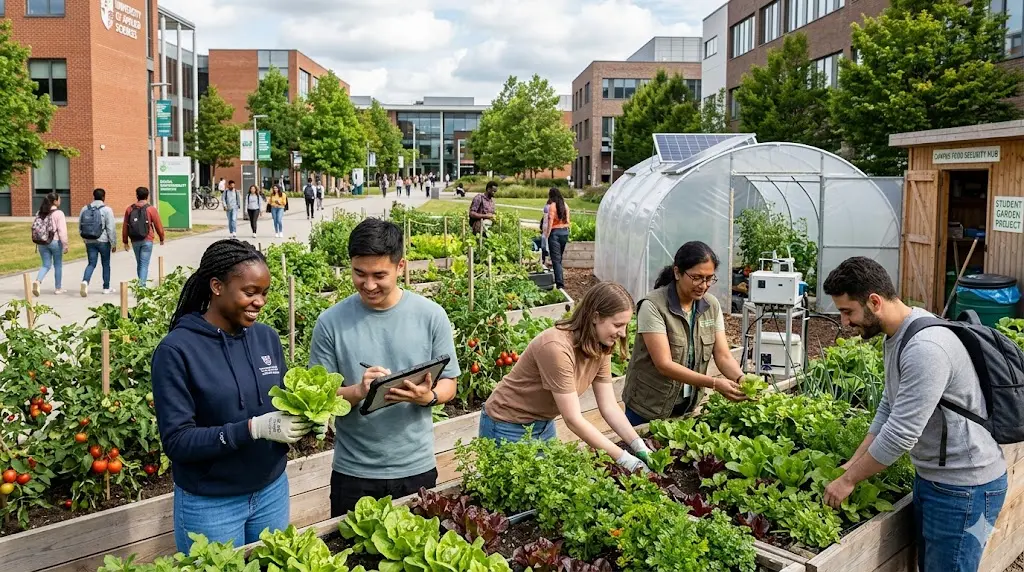
Why Food Security Is Transforming Higher Education Worldwide can be answered in a simple way: students learn better when they have reliable access to nutritious food. Research increasingly shows that food security affects academic performance, mental health, student retention, graduation rates, and overall educational success, making it a major priority for higher education institutions around the world.
Why Food Security Is Transforming Higher Education Worldwide has become an increasingly important question for educators, policymakers, and students alike. For many years, discussions about higher education focused primarily on tuition costs, academic quality, and career outcomes. Today, a different challenge is gaining attention: ensuring that students have consistent access to affordable and nutritious food.
Here's the thing. A student can have excellent professors, modern classrooms, and strong academic support systems. Yet if they regularly skip meals or struggle to afford food, learning becomes much harder. Research from multiple regions suggests that food security is now closely connected to student achievement, well-being, and educational equity.
What Is Food Security and Why Does It Matter?
Food Security: Reliable access to sufficient, safe, and nutritious food that supports an active and healthy life.
Food security goes beyond simply having something to eat.
It involves access to quality nutrition on a consistent basis.
When students experience food insecurity, they may worry about where their next meal will come from, reduce meal sizes, skip meals altogether, or rely on less nutritious food options.
Research findings increasingly show that food security directly affects educational outcomes.
Students facing food insecurity often report higher stress levels, lower academic engagement, and greater difficulty concentrating during classes.
What most people overlook is that food security is not only a social issue.
It's also an educational issue.
Universities are beginning to recognize that academic success and basic needs are deeply connected.
Why Food Security Matters in 2026
In 2026, higher education institutions face new economic and social realities.
Living costs continue to rise in many regions.
Housing expenses have increased.
Transportation costs remain significant.
Food prices fluctuate due to economic and environmental factors.
As a result, many students face financial pressure that extends beyond tuition.
Research indicates that students from diverse backgrounds can experience food insecurity, including domestic students, international students, graduate students, and part-time learners.
Food security matters because it influences several key outcomes.
Students who have access to reliable nutrition are generally better positioned to focus on learning, participate in campus activities, and complete their studies successfully.
Educational institutions increasingly view food security as part of student success strategies.
Expert Tip
When evaluating student support programs, institutions should treat food access as a core educational investment rather than a separate welfare initiative.
What Are the Main Causes of Student Food Insecurity?
Research identifies several factors contributing to food insecurity among higher education students.
Rising Cost of Living
Food costs have increased in many countries.
Students already managing tuition, housing, and transportation expenses often face additional pressure when grocery prices rise.
Limited Financial Resources
Many students operate within strict budgets.
Unexpected expenses can quickly affect their ability to purchase nutritious food consistently.
Employment Challenges
Part-time employment often helps students cover expenses.
However, balancing work and studies can be difficult.
Reduced work hours or job loss may increase food insecurity.
International Student Pressures
Students studying abroad often face higher living expenses and limited support networks.
These challenges may increase vulnerability to food insecurity.
Housing and Food Connections
Food insecurity frequently overlaps with housing affordability challenges.
Students experiencing financial strain in one area often experience pressure in another.
How Can Higher Education Institutions Improve Food Security? Step by Step
Research suggests several practical approaches that institutions can implement.
1. Assess Student Needs Regularly
Universities should gather data regarding food access and student well-being.
Understanding the scale of challenges helps guide effective solutions.
2. Expand Campus Food Support Programs
Food pantries, meal assistance initiatives, and emergency support programs can provide immediate relief for students experiencing difficulties.
3. Improve Financial Literacy Education
Budgeting and financial planning programs can help students manage resources more effectively.
Knowledge often supports better decision-making.
4. Build Community Partnerships
Collaboration with local organizations, food suppliers, and community groups can expand support networks.
Shared efforts often produce stronger outcomes.
5. Reduce Stigma Around Seeking Help
Many students hesitate to access support services.
Creating welcoming environments encourages participation.
6. Monitor Program Effectiveness
Institutions should evaluate outcomes regularly to ensure support programs continue meeting student needs.
Continuous improvement matters.
How Food Security Influences Academic Performance
Food security affects learning in direct and indirect ways.
Nutrition supports cognitive function.
Students who eat regularly often experience improved concentration, memory, and energy levels.
Food insecurity may create distractions that interfere with academic engagement.
Imagine a student preparing for important examinations.
One student has consistent access to healthy meals.
Another worries daily about food expenses and skips meals to save money.
Over time, these different circumstances can influence academic experiences significantly.
Research frequently finds associations between food insecurity and lower academic performance indicators.
This doesn't mean every food-insecure student struggles academically.
Many succeed despite difficult circumstances.
Still, barriers exist.
Reducing those barriers can improve educational outcomes.
Expert Tip
Institutions should evaluate student success through a broader lens. Academic support services work best when combined with programs addressing basic needs.
Why Universities Are Expanding Food Security Initiatives
Universities increasingly recognize that supporting student well-being contributes to institutional success.
Retention rates matter.
Graduation rates matter.
Student satisfaction matters.
Food security influences all three.
What most guides miss is that food security programs often benefit institutions as well as students.
Students who feel supported are more likely to remain enrolled and engaged.
Several universities have introduced food assistance initiatives, community gardens, subsidized meal programs, and emergency support funds.
These programs reflect a growing understanding that student success depends on more than classroom instruction.
Education happens within broader life circumstances.
The Connection Between Mental Health and Food Security
Food insecurity often affects emotional well-being.
Financial stress creates uncertainty.
Skipping meals may contribute to fatigue and frustration.
Ongoing concerns about basic needs can increase anxiety levels.
In my experience, discussions about student mental health sometimes focus heavily on counseling services while giving less attention to everyday living conditions.
That's probably a gap worth addressing.
Students experiencing food insecurity often face multiple stressors simultaneously.
Improving food access may indirectly support mental health outcomes.
Research increasingly highlights these connections.
Mental well-being and food security frequently influence one another.
Expert Tip
Food support initiatives should be integrated with broader student wellness strategies rather than operating as isolated programs.
A Counterintuitive Insight: Food Security Is About More Than Hunger
Many people assume food security simply means preventing hunger.
Research suggests a broader reality.
Students may consume enough calories while still lacking adequate nutrition.
Poor dietary quality can affect health, energy levels, and academic performance.
Here's what most people overlook.
Affordable food is not always nutritious food.
Students facing financial constraints sometimes prioritize low-cost options over balanced nutrition.
As a result, food security discussions increasingly focus on food quality as well as quantity.
This shift represents an important development in higher education policy.
Common Misconception: Food Insecurity Only Affects Low-Income Students
This belief oversimplifies a complex issue.
Students from various socioeconomic backgrounds may experience temporary financial difficulties.
Unexpected expenses, rising living costs, or changing family circumstances can affect food access.
Food insecurity can impact a broader range of students than many people realize.
Expert Tips and What Actually Works
After reviewing numerous studies and institutional initiatives, one pattern appears consistently.
Successful food security programs combine immediate assistance with long-term support.
Let me be direct.
Providing emergency food access helps.
However, lasting solutions often require broader strategies involving financial education, community partnerships, student engagement, and institutional commitment.
In my experience, the most effective programs reduce stigma while increasing accessibility.
Students are more likely to seek support when services feel normal, respectful, and easy to access.
Here's my hot take.
Food security may become one of the defining student success issues of the next decade.
Higher education institutions that address it proactively will probably see stronger outcomes than those treating it as a secondary concern.
People Most Asked About Why Food Security Is Transforming Higher Education Worldwide
What is food security in higher education?
Food security in higher education refers to students having reliable access to sufficient and nutritious food throughout their educational journey.
Why is food security important for students?
Food security supports concentration, academic performance, physical health, mental well-being, and overall student success.
How common is food insecurity among university students?
Research from multiple countries suggests that food insecurity affects a significant portion of student populations, although prevalence varies by region and institution.
How does food insecurity affect academic performance?
Students experiencing food insecurity may face challenges related to concentration, energy levels, stress management, and academic engagement.
What can universities do to improve food security?
Institutions can provide food assistance programs, emergency support services, financial literacy education, community partnerships, and student wellness initiatives.
Does food security affect mental health?
Yes. Financial stress and uncertainty regarding food access can contribute to anxiety, emotional strain, and reduced well-being.
Will food security remain a major issue in higher education?
Research suggests that food security will continue influencing higher education policy and student success discussions as living costs evolve globally.
Final Thoughts
Why Food Security Is Transforming Higher Education Worldwide is becoming increasingly clear through ongoing research and student experiences. Reliable access to nutritious food supports learning, improves well-being, strengthens academic outcomes, and contributes to educational equity. As institutions continue developing student success strategies, food security will likely remain a central focus for policymakers, educators, and communities seeking to create more supportive higher education environments.
Organizations looking to expand their online presence can benefit from combining business press release services with strategic business directory submission solutions to improve brand visibility, earn high authority backlinks, strengthen SEO ranking, increase organic traffic, and secure wider media coverage. With instant publishing opportunities and enhanced digital exposure, businesses can build trust and reach their target audiences more effectively.