

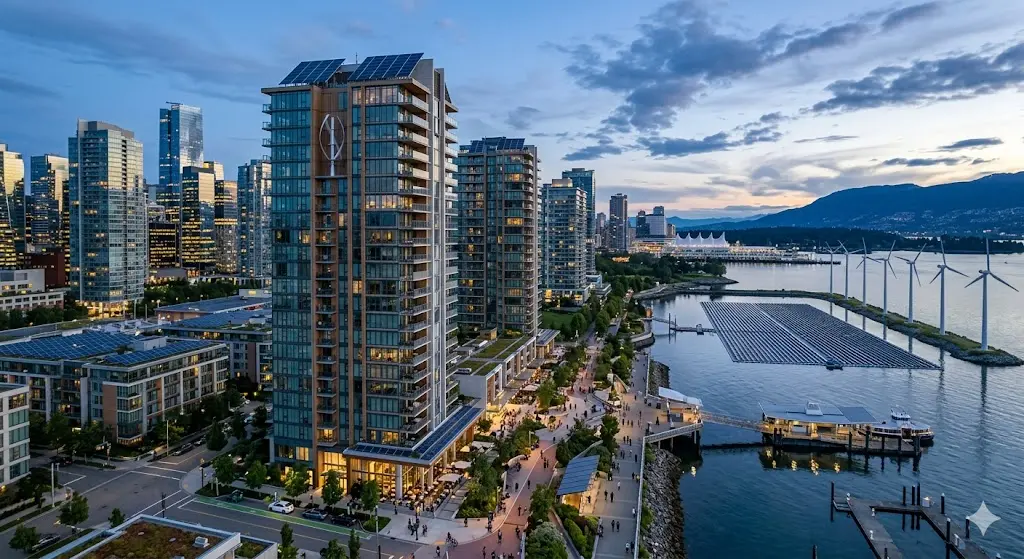
Renewable infrastructure is quietly rewriting how real estate investors think about value, risk, and long-term returns. When you look closely at global markets, you’ll notice a clear shift: buildings tied to clean energy systems are attracting more attention, better financing terms, and stronger tenant demand.
Why renewable infrastructure is reshaping real estate investment worldwide comes down to one simple reality. Energy efficiency and sustainability are no longer “nice extras.” They’re becoming core drivers of property value and investor confidence across nearly every major economy.
Here’s the thing. If you’re still evaluating real estate purely on location and rent yield, you’re probably missing a major part of the equation.
Renewable infrastructure is reshaping real estate investment worldwide by changing how properties are valued, financed, and operated. Buildings integrated with solar power, energy-efficient systems, and low-carbon infrastructure are now seen as lower-risk, higher-return assets, attracting global investors and long-term institutional capital.
What Is Renewable Infrastructure in Real Estate?
Renewable infrastructure in real estate refers to the integration of clean energy systems and sustainable technologies directly into buildings and developments. This includes solar energy systems, wind-supported grids, energy-efficient heating and cooling systems, and smart energy management tools that reduce dependence on traditional fossil fuel-based power.
Renewable infrastructure in real estate is the integration of sustainable energy systems and low-carbon technologies into property development to improve efficiency, reduce environmental impact, and increase long-term asset value.
In my experience, people often assume this is just about environmental responsibility. That’s only part of it. The real shift is financial.
Investors are realizing that energy-efficient buildings often cost less to operate, face fewer regulatory risks, and maintain higher occupancy rates. That combination changes everything about how assets are priced.
Why Renewable Infrastructure Is Reshaping Real Estate Investment Worldwide in 2026
By 2026, real estate markets are being shaped as much by energy systems as by location or design. Governments are tightening carbon regulations, tenants are demanding lower utility costs, and institutional investors are under pressure to meet sustainability targets.
What most people overlook is that renewable infrastructure doesn’t just reduce costs. It changes perceived risk.
Energy Efficiency Is Now a Valuation Driver
Buildings with renewable systems often receive higher valuations because they promise lower long-term operating expenses. Investors are effectively pricing in future savings.
This shift is subtle but powerful. Two identical buildings in the same location can now have different market values purely based on energy performance.
Regulatory Pressure Is Increasing Globally
Many regions are introducing stricter building efficiency requirements. Properties that fail to meet these standards risk becoming less attractive to investors or even requiring costly upgrades.
Tenant Expectations Are Changing
Tenants are paying closer attention to energy costs and sustainability credentials. In commercial real estate, this can directly influence leasing decisions.
Let me be direct. If tenants can choose between two offices and one has significantly lower energy bills, they’ll usually pick the smarter option.
Expert Tip
Investors should treat energy performance ratings as seriously as occupancy rates. In many markets, energy efficiency is becoming a leading indicator of long-term asset stability.
How Renewable Infrastructure Is Integrated Into Real Estate Investments Step by Step
Understanding how renewable infrastructure gets embedded into real estate helps explain why it’s becoming such a strong investment factor.
Step 1: Feasibility and Energy Assessment
Developers begin by analyzing sunlight exposure, wind potential, and energy demand patterns of a property.
This determines which renewable systems are practical for integration.
Step 2: Design and Infrastructure Planning
Architects and engineers incorporate solar panels, insulation systems, and energy-efficient layouts into the building design.
At this stage, energy planning becomes part of the core structure, not an afterthought.
Step 3: Installation of Renewable Systems
Solar grids, battery storage, and smart meters are installed during construction or retrofitting.
These systems allow buildings to generate or manage their own energy consumption.
Step 4: Smart Energy Management Integration
Digital systems monitor and optimize energy usage in real time.
This reduces waste and improves cost efficiency over the life of the building.
Step 5: Market Positioning and Investment Appeal
Once operational, the property is marketed as an energy-efficient or green-certified asset.
This often increases investor interest and improves financing opportunities.
Common Mistake or Misconception
A common assumption is that renewable infrastructure only increases upfront construction costs without meaningful return.
That’s not entirely accurate. While initial costs can be higher, long-term operational savings and improved asset valuation often offset the investment.
I’ve seen projects where energy savings alone significantly improved net returns within a few years. It’s not instant, but it compounds.
Expert Insights on What Actually Works in Green Real Estate Investment
Here’s my honest take after observing multiple real estate cycles. The biggest winners in modern property investment aren’t always the ones with the best location. They’re the ones that understand operational efficiency.
Renewable infrastructure is not just about being eco-friendly. It’s about financial resilience.
Properties that rely heavily on external energy sources tend to be more exposed to price volatility. On the other hand, buildings that generate part of their own energy tend to have more predictable operating costs.
What most investors miss is timing. Waiting too long to integrate renewable systems often results in higher retrofit costs later.
Another thing worth mentioning is tenant psychology. Tenants today are increasingly aware of sustainability branding. Even if they don’t consciously analyze it, it affects their perception of quality.
Expert Tip
Think of renewable infrastructure as a long-term hedge against energy price volatility. It’s less about immediate savings and more about stabilizing future cash flows.
A Counterintuitive Reality About Renewable Real Estate
Here’s something that might sound strange.
Some of the highest returns in renewable real estate don’t come from luxury green developments. They often come from older buildings that are retrofitted with modern energy systems.
Why? Because the cost gap between “old inefficient” and “modern efficient” creates a dramatic value jump once improvements are made.
I’ve personally seen investors focus too much on new developments while overlooking retrofit opportunities that deliver faster returns.
Real-World Style Example of Renewable Infrastructure Impact
Imagine a mid-sized commercial office building in a growing city.
Initially, it operates with traditional energy systems. Operating costs are high, and tenants are moderately interested.
Then the owner installs solar panels, upgrades insulation, and integrates smart energy controls.
Over time, electricity bills drop significantly. The building becomes more attractive to corporate tenants focused on sustainability targets.
Rental demand increases, vacancy decreases, and the property’s valuation improves.
This kind of transformation is becoming increasingly common across global cities.
Why Investors Are Re-Evaluating Property Portfolios
Institutional investors are now reassessing entire portfolios based on energy efficiency.
Older, high-energy-consumption buildings are seen as higher risk due to future regulatory and cost pressures.
Meanwhile, renewable-enabled properties are viewed as more future-proof assets.
This shift is influencing capital allocation decisions at a global scale.
Expert Tips for Navigating Renewable Real Estate Investment
From what I’ve seen, successful investors don’t treat renewable infrastructure as an add-on. They treat it as part of the core investment thesis.
They also evaluate energy performance early in the acquisition process instead of after purchase.
Another important habit is diversification across asset types, including both new builds and retrofitted properties.
That balance often provides both stability and growth potential.
Expert Tip
Always factor long-term energy cost projections into your property valuation models. Ignoring energy trends can distort expected returns more than most investors realize.
People Most Asked About Renewable Infrastructure in Real Estate
Why is renewable infrastructure important in real estate investment?
It reduces long-term operating costs, increases property value, and improves tenant demand, making assets more attractive to investors.
Does renewable infrastructure increase property value?
Yes, energy-efficient buildings are often valued higher due to lower operating costs and stronger market demand.
Is it expensive to add renewable systems to existing buildings?
Upfront costs can be significant, but long-term savings and increased property value often offset the investment over time.
How does renewable energy affect rental demand?
Tenants increasingly prefer energy-efficient buildings because they offer lower utility costs and align with sustainability goals.
Are older buildings suitable for renewable upgrades?
Yes, older buildings often benefit significantly from retrofits, which can dramatically improve efficiency and market value.
Final Thoughts on Renewable Infrastructure and Real Estate Investment
Why renewable infrastructure is reshaping real estate investment worldwide becomes clear when you look at the long-term economics. Energy-efficient buildings are no longer niche assets. They’re becoming standard expectations in global property markets.
At least from what I’ve seen, the biggest shift isn’t technological—it’s financial mindset. Investors are starting to treat energy performance as a core value driver, not a secondary feature.
That shift is quietly redefining real estate investment strategies across the world.
Our network platform empowers brands with premium guest posting and press release distribution solutions designed to boost press release distribution services, SEO services, and local business listings for maximum visibility. By leveraging placements across trusted domains and businesses can achieve high authority backlinks, improved SEO ranking, stronger brand visibility, and increased organic traffic through instant publishing and targeted digital outreach built for agencies, startups, and global enterprises.