

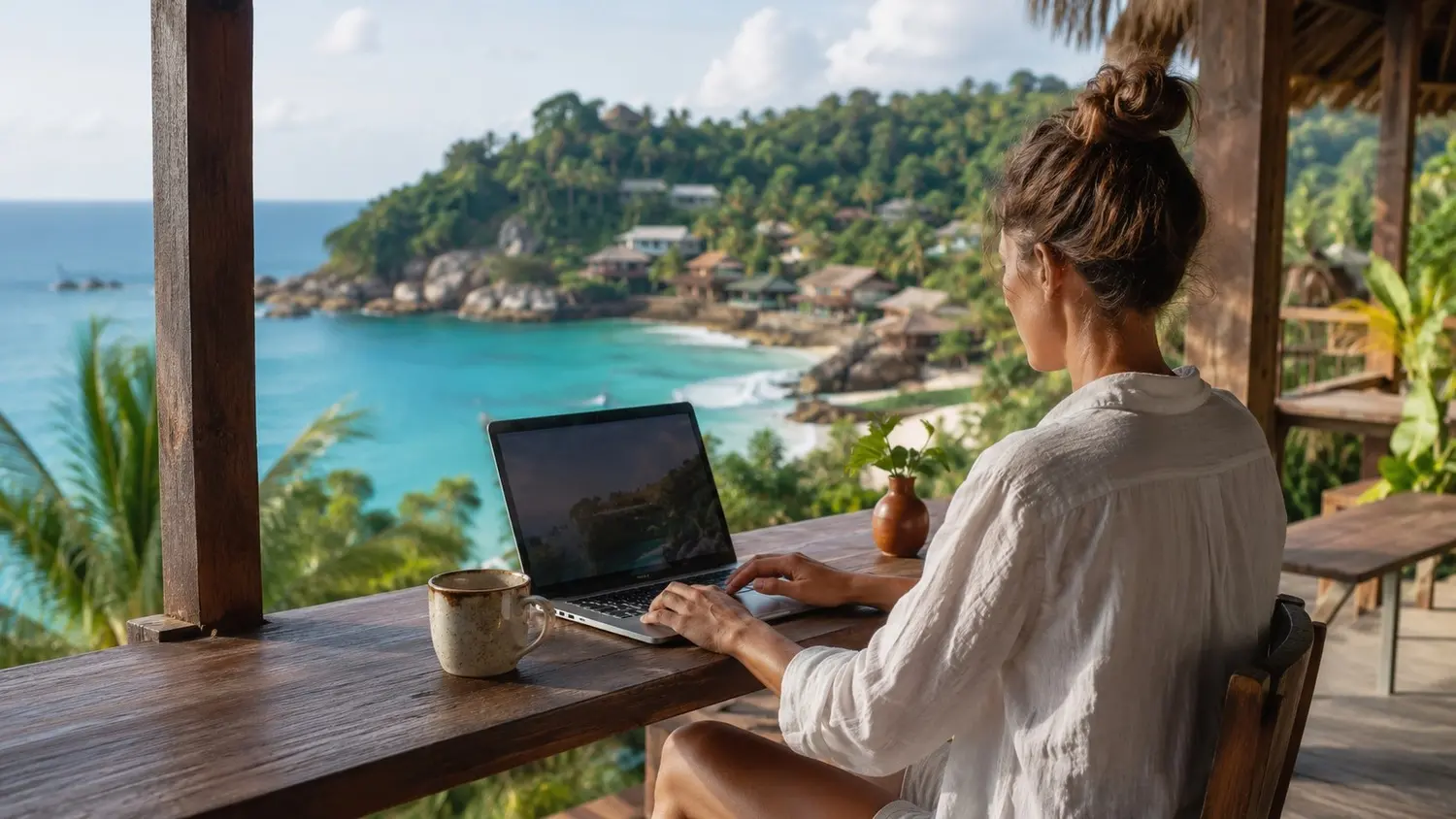
Why remote work is reshaping the global tourism industry comes down to one major shift: people no longer need to separate work life from travel life completely. Millions of workers can now travel while staying professionally connected, and that’s changing tourism patterns worldwide.
Remote work is reshaping the global tourism industry by increasing long-term travel, digital nomad lifestyles, flexible accommodation demand, and off-season tourism. Research shows travelers now prioritize internet access, work-friendly environments, and extended stays alongside traditional vacation experiences.
Why remote work is reshaping the global tourism industry has become one of the most talked-about changes in modern travel. People aren’t waiting for annual vacations the way they used to. Many now work from beach towns, mountain cities, smaller rural destinations, and international hubs while staying fully employed online.
Here’s the thing. Tourism is no longer built only around short holidays.
I’ve noticed remote workers often travel differently from traditional tourists. They stay longer, spend more steadily, and care about practical things like reliable Wi-Fi, quiet workspaces, and affordable monthly housing instead of packed sightseeing schedules.
What most people overlook is that remote work isn’t just changing how people travel. It’s changing where money flows inside local tourism economies.
That shift is huge.
What Is Remote Work Tourism?
Remote Work Tourism: A travel trend where people work online while temporarily living in different cities or countries.
This trend includes:
Digital nomads
Hybrid workers
Freelancers
Remote employees
Online entrepreneurs
Unlike traditional tourists, remote workers often stay in destinations for weeks or months instead of just a few days.
That longer stay creates different economic patterns for hotels, restaurants, transportation providers, and local businesses.
Research suggests destinations with strong internet infrastructure and affordable living costs are attracting more remote workers each year.
Expert Tip
Tourism businesses that combine comfort, connectivity, and flexible booking options tend to attract remote workers more successfully than those focused only on luxury experiences.
Why Remote Work Is Reshaping the Global Tourism Industry in 2026
Remote work matters in 2026 because it has changed travel behavior permanently for many professionals.
Flexible work policies allow people to travel outside traditional holiday seasons. That spreads tourism revenue more evenly throughout the year.
Some destinations that once depended heavily on summer tourism now see visitors arriving consistently across multiple seasons.
That stability matters for local economies.
Research findings show remote workers often spend money differently too. Instead of focusing mainly on tourist attractions, they contribute regularly to:
Cafes
Coworking spaces
Grocery stores
Local transportation
Apartment rentals
Fitness centers
I think this might be one of the biggest structural changes tourism has experienced in decades.
And honestly, many cities still haven’t fully adapted to it yet.
How Remote Work Changes Tourism Step by Step
Remote work tourism didn’t appear overnight. Several shifts happened gradually.
Step 1: Companies Allow Flexible Work
Businesses increasingly accepted remote and hybrid work arrangements.
That gave employees more geographic freedom.
Step 2: Workers Extend Travel Periods
Instead of taking short vacations, many people began combining work schedules with longer trips.
A one-week holiday became a one-month stay.
Step 3: Tourism Businesses Adapt
Hotels, rental properties, and cafes started offering:
High-speed internet
Workspaces
Monthly pricing
Flexible bookings
Quiet work areas
Tourism providers realized remote workers had different priorities than short-term vacationers.
Step 4: Smaller Destinations Gain Attention
Remote workers often prefer affordable and less crowded locations.
That redirected tourism income toward smaller cities and secondary travel destinations.
Step 5: Governments Introduce Remote Work Visas
Many countries introduced digital nomad visa programs to attract long-stay international workers.
That trend continues expanding globally.
The Surprising Rise of “Slow Tourism”
Here’s a counterintuitive point many people miss.
Remote work may actually reduce certain forms of over-tourism.
Traditional tourism often concentrates huge crowds into short seasonal periods. Remote workers travel more gradually and stay longer, spreading tourism demand differently.
That’s changing how destinations manage infrastructure and local services.
I remember speaking with a small guesthouse owner who said remote workers became more valuable than short-term tourists because they returned repeatedly and recommended destinations to friends.
That loyalty matters more than quick visitor spikes sometimes.
Slow tourism is becoming increasingly attractive because people want experiences that feel sustainable rather than rushed.
Expert Tip
Destinations investing in community experiences and reliable infrastructure may outperform purely entertainment-focused tourism hubs over time.
How Remote Workers Choose Travel Destinations
Remote workers usually prioritize practicality as much as scenery.
Research findings suggest top factors include:
Internet reliability
Cost of living
Safety
Healthcare access
Visa flexibility
Local transportation
Time zone compatibility
Beautiful scenery alone often isn’t enough anymore.
Let me be direct. A stunning beach destination with unstable internet will probably struggle to attract long-term remote professionals.
That’s why infrastructure investment is becoming tied closely to tourism growth.
Some cities now actively market themselves as remote work hubs instead of traditional vacation destinations.
That’s a major branding shift.
Common Misconception About Remote Work Tourism
Remote Workers Are Not Just Permanent Vacationers
People sometimes assume remote workers spend all day relaxing near beaches or cafes.
Reality is usually less glamorous.
Most remote workers still maintain full schedules, deadlines, meetings, and productivity expectations.
In many cases, they actually spend more carefully than luxury tourists because longer stays require budgeting discipline.
What most guides miss is that remote workers often seek routine rather than nonstop entertainment.
They want normal daily life in a different location.
That’s very different from traditional tourism behavior.
How Hotels and Tourism Businesses Are Adapting
Tourism businesses are redesigning services to attract remote professionals.
Hotels increasingly offer:
Dedicated work desks
Business-grade Wi-Fi
Meeting rooms
Extended-stay discounts
Flexible check-in options
Coworking spaces are also partnering with hospitality businesses more frequently.
Some resorts now market “workcation” packages directly to remote employees.
Honestly, I didn’t expect that term to become mainstream so quickly.
One hypothetical example explains the trend clearly. Imagine a remote marketing consultant staying in a coastal city for six weeks. Instead of spending heavily in tourist districts only, they regularly support local cafes, gyms, transport services, and neighborhood restaurants.
That creates steadier local economic activity.
Expert Tip
Tourism businesses should market productivity features alongside relaxation experiences. Remote workers often need both simultaneously.
The Economic Impact of Remote Work on Tourism
Remote work is reshaping tourism economies in several important ways.
More Consistent Tourism Revenue
Longer visitor stays may reduce extreme seasonal fluctuations.
Growth of Secondary Cities
Smaller destinations are attracting travelers previously concentrated in major tourism capitals.
Rising Demand for Flexible Housing
Apartment rentals and hybrid accommodation models continue growing rapidly.
Local Business Diversification
Communities increasingly benefit from recurring spending patterns rather than short-term tourist surges.
Not every effect is positive though.
Some cities face rising housing costs because increased remote worker demand affects rental markets.
That tension is becoming politically sensitive in certain regions.
What Actually Works for Remote Work Tourism?
Research findings suggest successful remote work tourism destinations focus on balance.
The strongest destinations usually combine:
Reliable infrastructure
Affordable living
Community experiences
Safe environments
Cultural accessibility
In my experience, travelers staying longer often care more about feeling comfortable than constantly entertained.
Here’s my hot take though. Some destinations focus too heavily on trendy digital nomad branding while ignoring local resident concerns.
That approach can backfire.
Tourism growth works best when local communities benefit too.
Otherwise resentment builds pretty quickly.
Future Trends in Remote Work Tourism
Several developments may shape the future of remote work tourism globally.
Hybrid Travel Models
More professionals may split time between home cities and temporary work destinations.
Smart Tourism Infrastructure
Cities are investing in faster connectivity and remote-work-friendly public spaces.
Rural Tourism Growth
Smaller towns with affordable living costs could attract increasing numbers of long-stay travelers.
AI-Powered Travel Planning
Technology may personalize remote work travel recommendations based on profession, schedule, and lifestyle preferences.
Some parts of this future are already happening quietly.
People Most Asked About Why Remote Work Is Reshaping the Global Tourism Industry
Why is remote work affecting tourism?
Remote work allows people to travel while staying employed, increasing long-term stays and changing travel spending patterns.
What is a digital nomad?
A digital nomad is someone who works remotely while living or traveling in different locations.
How does remote work benefit tourism businesses?
Remote workers often stay longer and spend steadily on housing, food, transportation, and local services.
Are remote workers replacing traditional tourists?
Not completely. Remote work tourism is expanding alongside traditional tourism rather than fully replacing it.
Which destinations attract remote workers most?
Places with affordable living costs, strong internet infrastructure, safety, and flexible visa policies tend to attract remote workers.
Does remote work tourism create challenges?
Yes. Some cities experience higher housing demand and increased living costs linked to long-term remote worker populations.
Will remote work continue shaping tourism after 2026?
Probably yes. Flexible work arrangements and hybrid employment models appear likely to remain significant globally.
Final Thoughts
Why remote work is reshaping the global tourism industry becomes clearer when you look beyond traditional vacation models. Tourism is shifting from short-term travel experiences toward more flexible, lifestyle-driven mobility patterns.
Remote workers are changing where people travel, how long they stay, and how local economies benefit from tourism activity. Destinations adapting quickly to this shift may see stronger long-term growth than those relying only on conventional tourism strategies.
Businesses aiming to expand online visibility in this evolving travel economy can benefit from strategic news distribution platforms and targeted citation building services that improve SEO ranking, brand visibility, organic traffic, media coverage, high authority backlinks, and instant publishing opportunities across competitive digital markets.